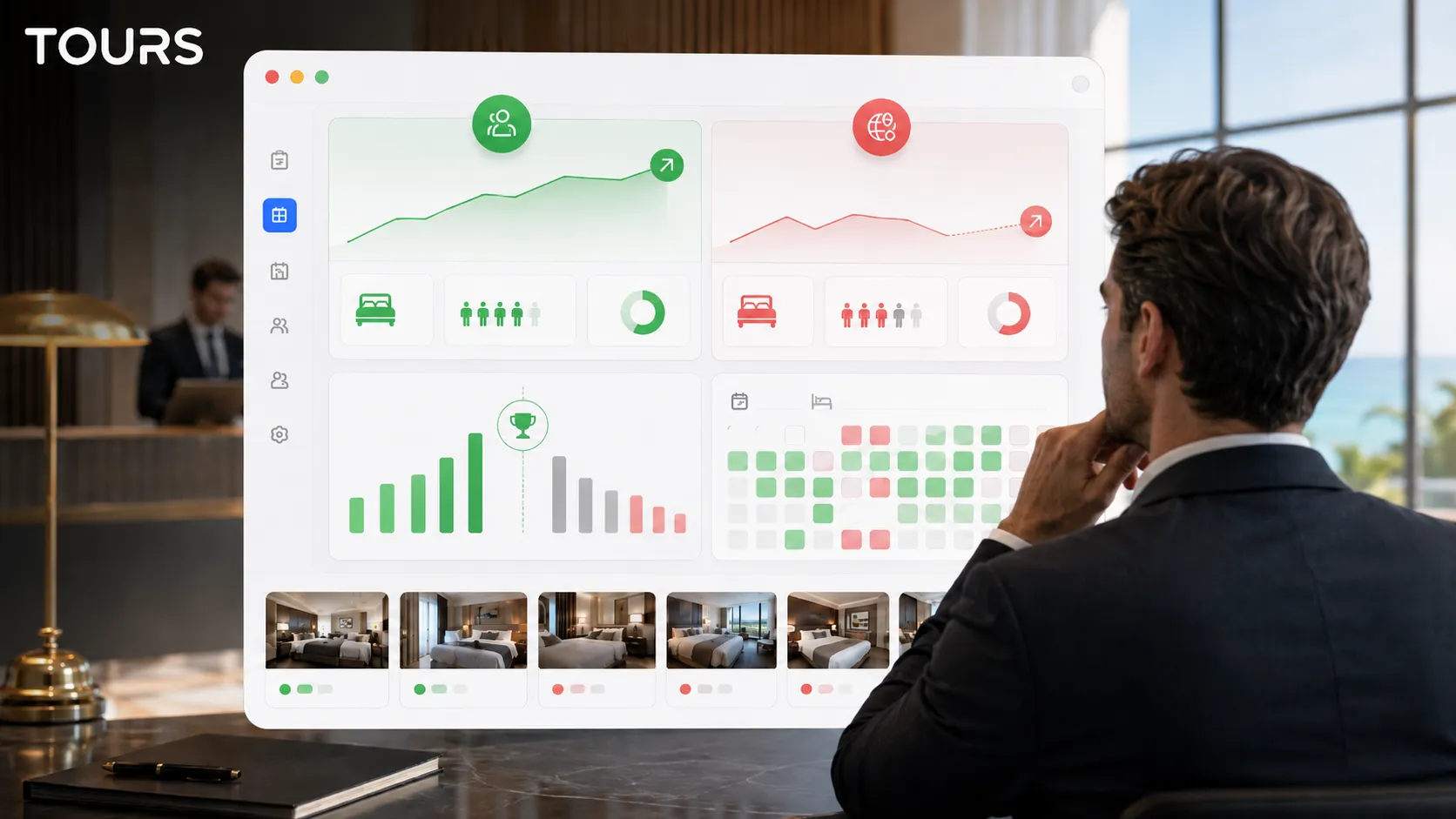

Direct bookings vs OTAs is not an all-or-nothing choice. For a hotel or guesthouse, OTAs bring visibility and new demand, but direct reservations give you more control over cost, guest data and communication before arrival. The right strategy is to use OTAs as a demand source, not as your only sales channel.
Tours is a SaaS platform for interactive 360° virtual tours with integrated bookings, hotspots and usage statistics. For hotels and guesthouses, it helps the presentation of rooms, amenities and shared spaces lead naturally toward a direct inquiry or booking, without turning the virtual tour into a separate page outside the commercial flow.
In short
- OTAs are useful for visibility, especially when the property does not yet have its own traffic or a known brand.
- Direct bookings help with margin, communication, loyalty and control over the pre-arrival experience.
- Booking.com dependency becomes risky when you no longer know what each profitable reservation really costs you.
- You do not need to stop OTAs abruptly. It is safer to move repeatable demand gradually toward your own website.
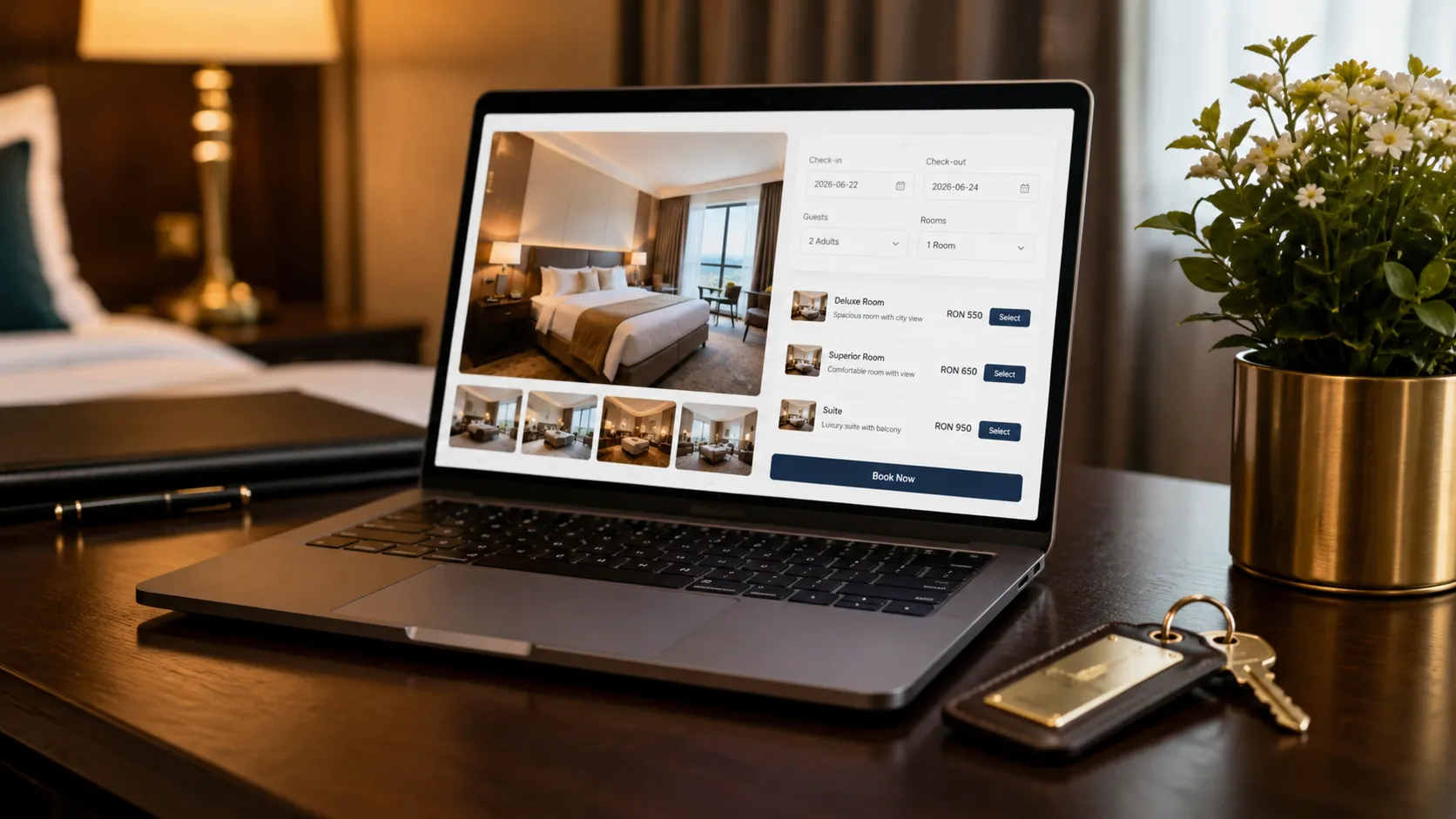
- A 360° tour with a booking action can reduce hesitation, especially for rooms, suites, apartments and premium spaces.
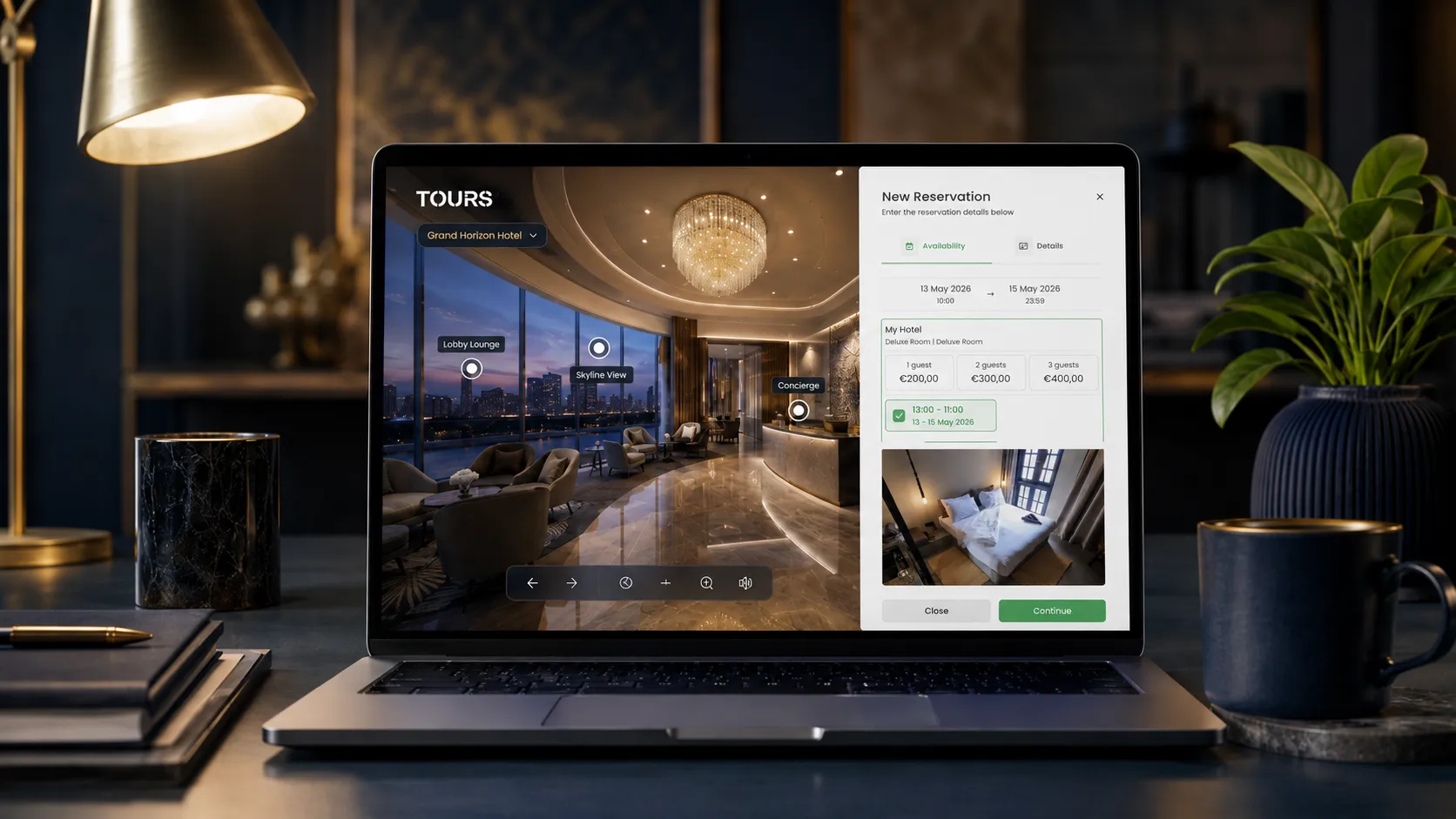
- In Tours, bookings can be connected to the tour, scenes, scene groups or hotspots, depending on how the property is structured.
Direct bookings vs OTAs: what are you really comparing?
You are comparing two different types of commercial control. An OTA booking can bring you a guest you might not have attracted otherwise, but the relationship is mediated. A direct booking starts from your website, phone, email, form or interactive tour and gives you more room to explain, upsell and build loyalty.
In the independent hotel market, third-party channel pressure is real. Cloudbeds shows in its independent hotel report that, in 2025, OTAs reached 63.4% of bookings, while direct reservations represented 36.6%.[1]Source These numbers do not mean OTAs are bad. They mean dependency should be measured as a margin and control risk.
| Criterion | Direct bookings | OTAs | Practical decision |
|---|---|---|---|
| Acquisition cost | Easier to control once you have your own traffic | Commission or distribution cost on every booking | Compare net profit, not only gross revenue |
| Guest relationship | Direct communication, first-party data and better chances of repeat stays | Communication filtered by the platform and external rules | Move returning guests toward your own channel |
| Visibility | Depends on brand, SEO, ads, email and referrals | Strong for new demand and markets where you are not yet known | Keep OTAs for new demand, but develop your website |
| Experience control | You can explain room differences, amenities and conditions | The page is standardized and compared directly with other properties | Use your tour, photos and messaging to create clarity |
| Loyalty | Easier to create return-stay offers | The guest may stay loyal to the platform, not the property | Collect consent-based data and reasons to return |
| Operational risk | Requires a website, booking system and fast response | Rules, ranking and costs can change | Do not build a single point of dependency |
When do OTAs bring real value?
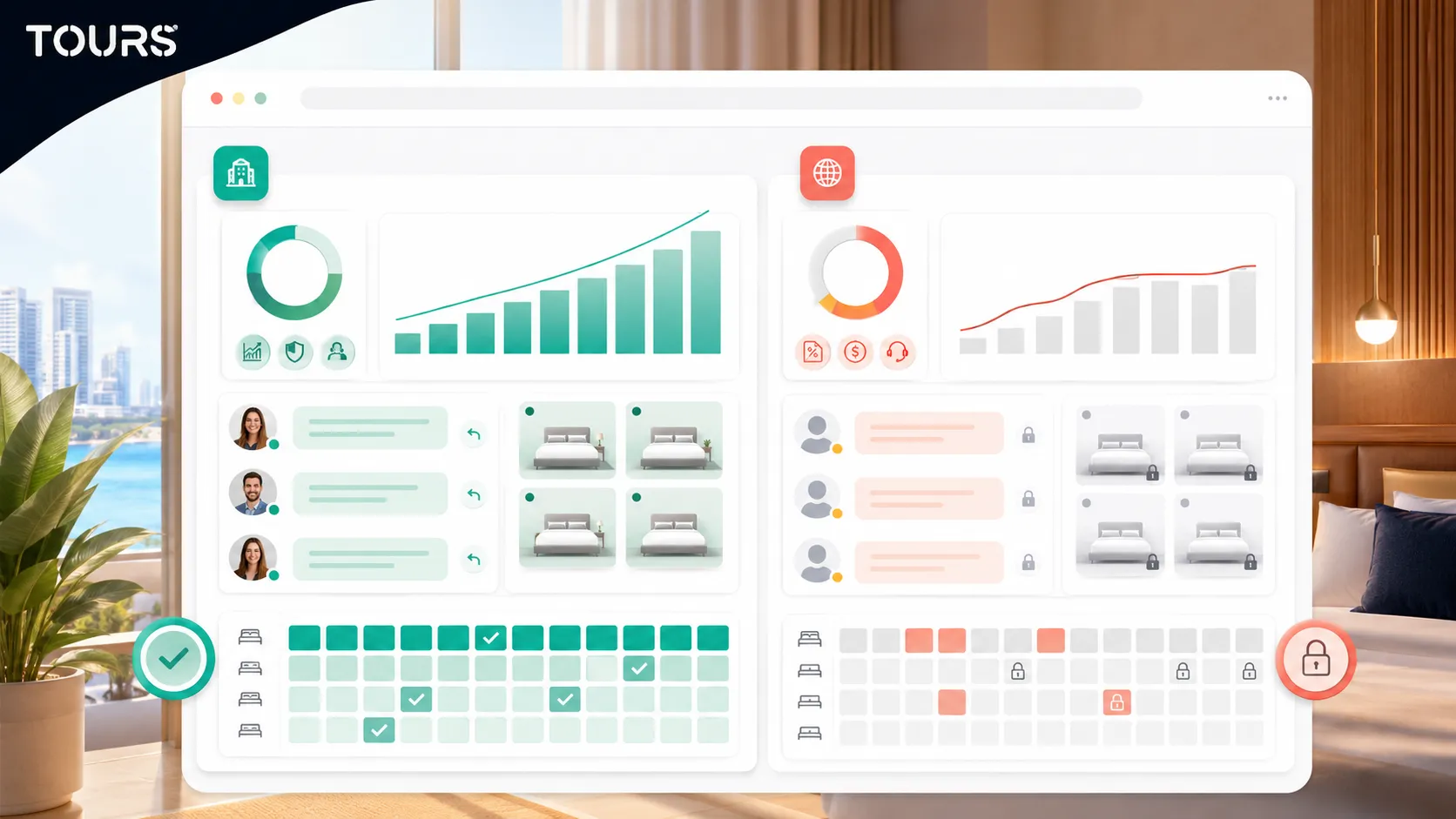
OTAs bring value when they give you access to demand you cannot generate yourself at the same cost. For a new property, a seasonal hotel or a guesthouse in a less-known area, large platforms can work as discovery engines. The problem starts when every guest, including returning guests, comes only through that channel.
Skift Research estimates that OTAs distributed $266 billion in gross hotel bookings in 2024, while digital direct channels are projected to overtake OTAs by 2030.[2]Source For hoteliers, the practical message is that distribution is not going away, but the property-owned channel is becoming more important in the mix.
- Use OTAs for new markets, low-demand periods and guests who do not know the property yet.
- Track whether OTA bookings arrive on hard-to-fill dates or only on dates you would have sold anyway.
- Do not treat all OTA bookings the same. An off-season booking can be valuable, while one on a high-demand weekend may be too expensive.
- After the stay, build a real reason for the next direct booking: better communication, your own package, a clear room tour or a return-stay offer.
Where do you lose money when you depend too much on Booking.com?
You lose money when you look only at occupancy and ignore the real cost of each channel. Booking.com can be profitable for certain periods, but dependency becomes expensive if you pay commission for demand you could have won directly, if you see more cancellations or if you can no longer communicate effectively with guests before arrival.
Commission is not the only cost, but it is the most visible one. SiteMinder notes that the Booking.com fee usually ranges from 10% to 25% per booking, depending on the location and the agreement with the host or hotel.[3]Source For small properties, the gap between revenue and profit can be much larger than it looks in the occupancy report.
The channel also affects booking stability. Cloudbeds reports a 21.8% cancellation rate for OTA bookings and 10.6% for direct bookings in 2025.[1]Source If your property has many late cancellations, the real cost must be calculated together with the risk of reselling the room.
- Commission is visible immediately, but the cost of cancellations shows up only when the room remains unsold.
- Lack of first-party data reduces your chances of creating return-stay offers or customized packages.
- Limited communication makes it harder to explain parking, access, amenities or differences between rooms.
- Direct comparison with other properties can push the decision toward price instead of the real experience.
How do you calculate net profit by channel?
Calculate net profit by channel starting from real revenue, not from the number of bookings. For each channel, subtract commission, ad cost, discount cost, operating time, cancellations and lost opportunities. Only then should you compare which channel deserves more promotion, less exposure or a specific role in certain periods.
| Question | Why it matters | Example decision |
|---|---|---|
| What is the average net revenue per booking? | High occupancy can hide low margin | Keep the OTA for weak dates and promote requested dates directly |
| How many cancellations happen by channel? | Cancellations change the availability forecast | Request clearer guarantees or adjust the policy for certain channels |
| How many guests come back directly? | Repeat stays reduce acquisition cost | Send your own offers after the stay, with the guest's consent |
| Which rooms sell through each channel? | Premium rooms need visual explanation | Use the 360° tour and dedicated pages for room types that are hard to compare |
| Where do you lose questions before booking? | Unclear answers lead to abandonment | Add answers, images, a tour and a booking action on the website |
A simple rule is to separate new demand from demand you could capture directly. If a guest searches for your hotel name, enters your website and then leaves for an OTA because they cannot find clear information or an easy booking action, the problem is not visibility. The problem is conversion on your own channel.
How do you reduce Booking.com dependency without losing visibility?
Reduce dependency gradually, not through a sudden shutdown. The goal is not to eliminate Booking.com, but to turn your own website into a credible channel for guests who are already considering you. Start with clear information, a better visual experience, easy-to-understand availability and concrete reasons to book directly.
- Build a clear room page with real differences between room types, not only similar photos.
- Add a visible booking action on the website and near the content that convinces the guest.
- Use post-stay email for return visits without violating consent or the rules of the original channel.
- Measure branded searches and website traffic separately from generic traffic.
- Do not promise the lowest price if your commercial rules do not allow it. You can offer clarity, packages, benefits or better communication.
- Test by period or room type, not across the whole property from day one.
A good step is to choose a category where presentation matters: suites, family rooms, apartments, rooms with views, romantic packages or rooms for longer stays. There, the guest has more questions and has a harder time comparing only from a standardized list. The direct channel can win when it explains better.
How does a 360° tour help grow direct bookings?
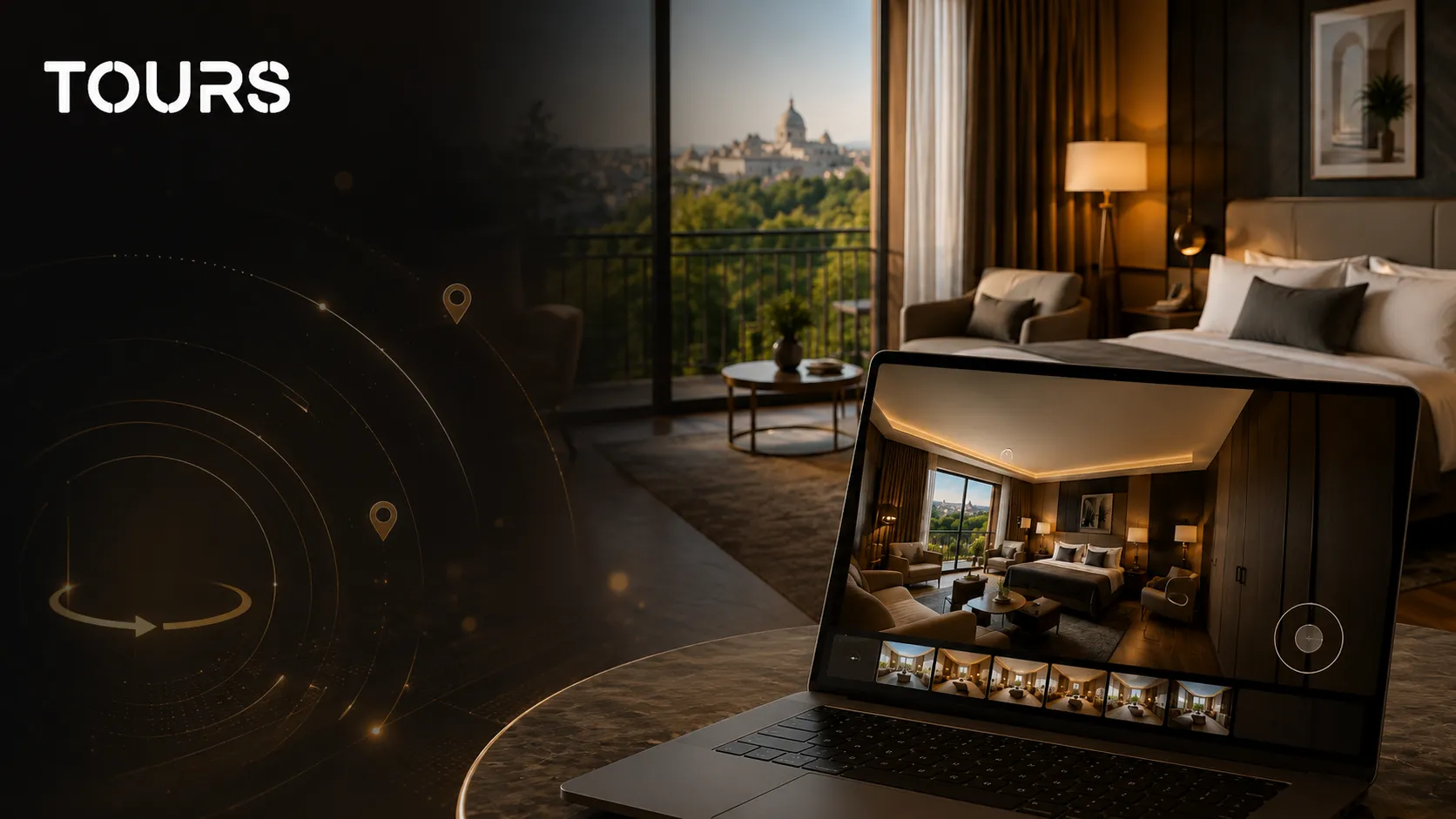
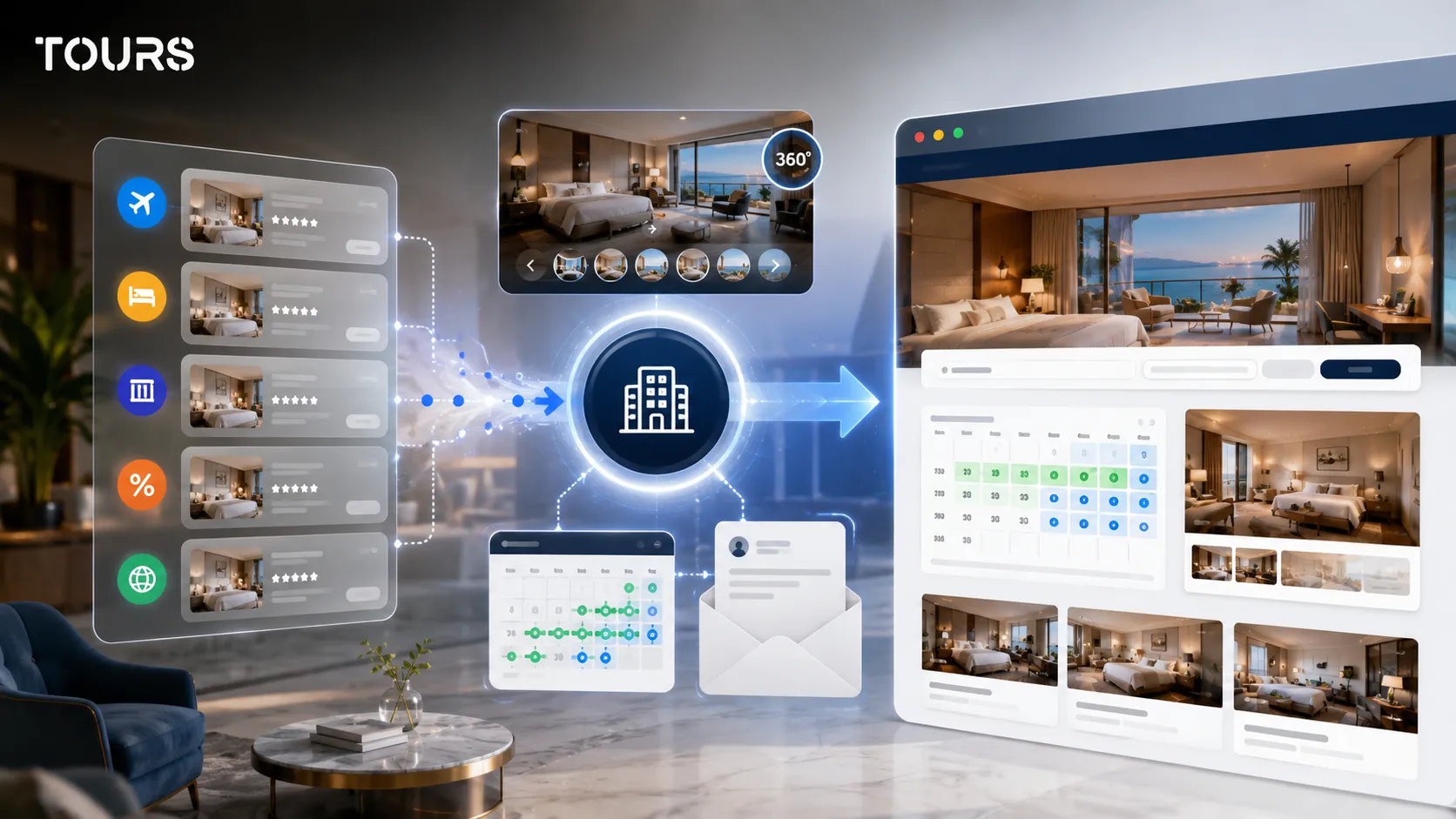
A 360° virtual tour helps direct bookings because it reduces uncertainty before the decision. The guest can see the room, bathroom, balcony, reception, restaurant, parking area or breakfast space in a coherent path. When the booking action is close to the information that convinces them, your own website no longer feels like a secondary channel.
This article is not trying to replace the guides about hotel virtual tours or hotel booking systems. Here, the 360 tour is discussed as a conversion element in a direct booking strategy: how to turn guest attention into a direct inquiry or reservation without repeating the full technical architecture.
- For standard rooms, the tour clarifies space and reduces repetitive questions.
- For premium rooms, the virtual tour justifies the price difference through view, layout and atmosphere.
- For guesthouses, the tour shows shared areas, the yard, the terrace and access, not only the bed in the room.
- For serviced apartments, the tour explains the kitchen, work area, access and storage space.
- For events or packages, the tour can guide the visitor toward the relevant spaces before they send an inquiry.
How do you use Tours as a bridge between presentation and booking?
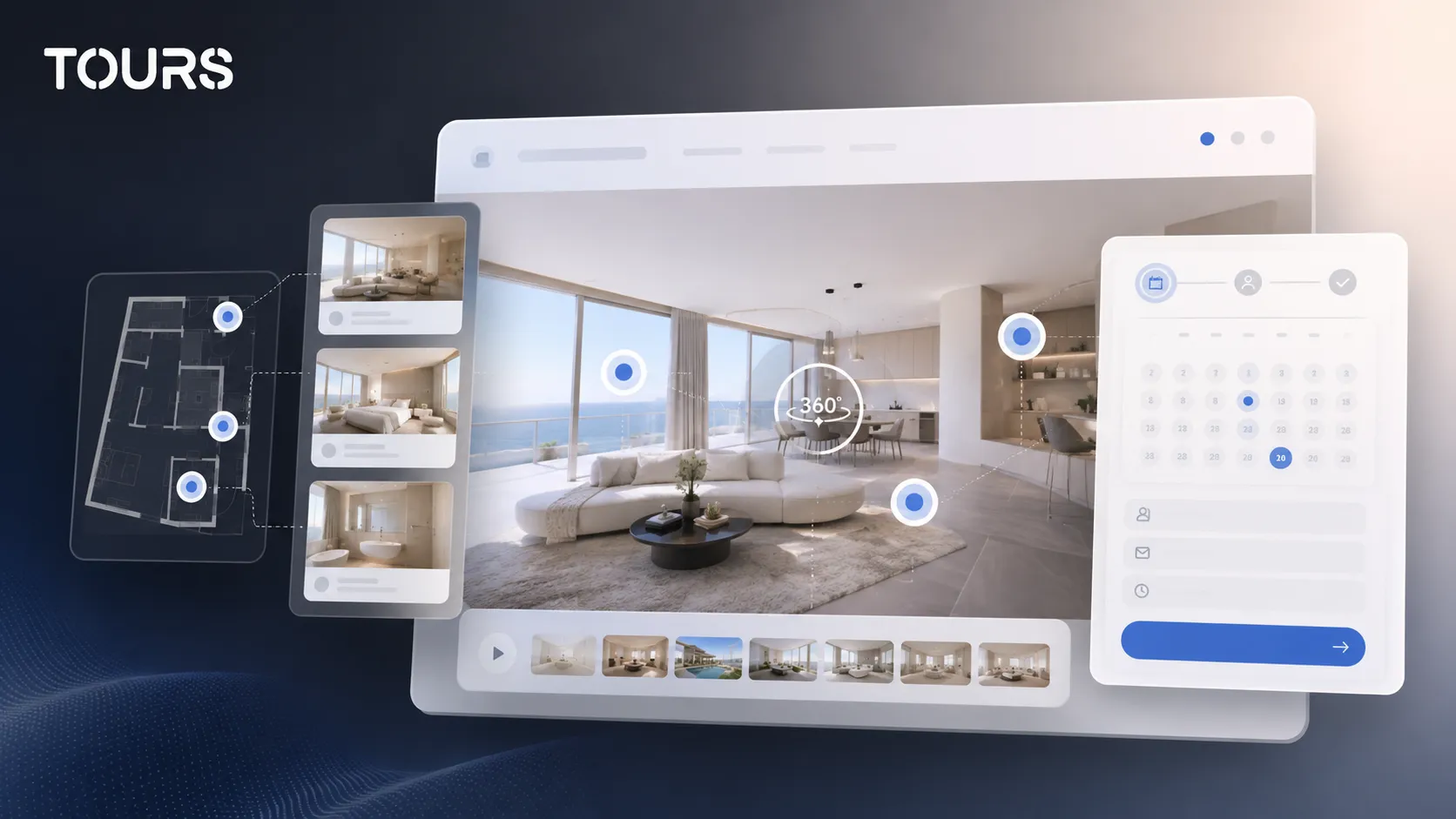
Use Tours as a bridge when the tour is not only a polished presentation, but the place where the guest understands what they are booking and can act. In Tours, the 360° presentation, hotspots, usage statistics, QR sharing, website integration code and bookings work together in the browser, without asking the visitor to change context too early.
The practical flow starts on the 'My Tours' page: you create a new tour, complete the name and category, optionally add location, price and tags, then upload the first 360° scene and name it clearly. After you continue, the 360° editor opens for scenes, navigation, hotspots, scene groups, text, images and video materials.
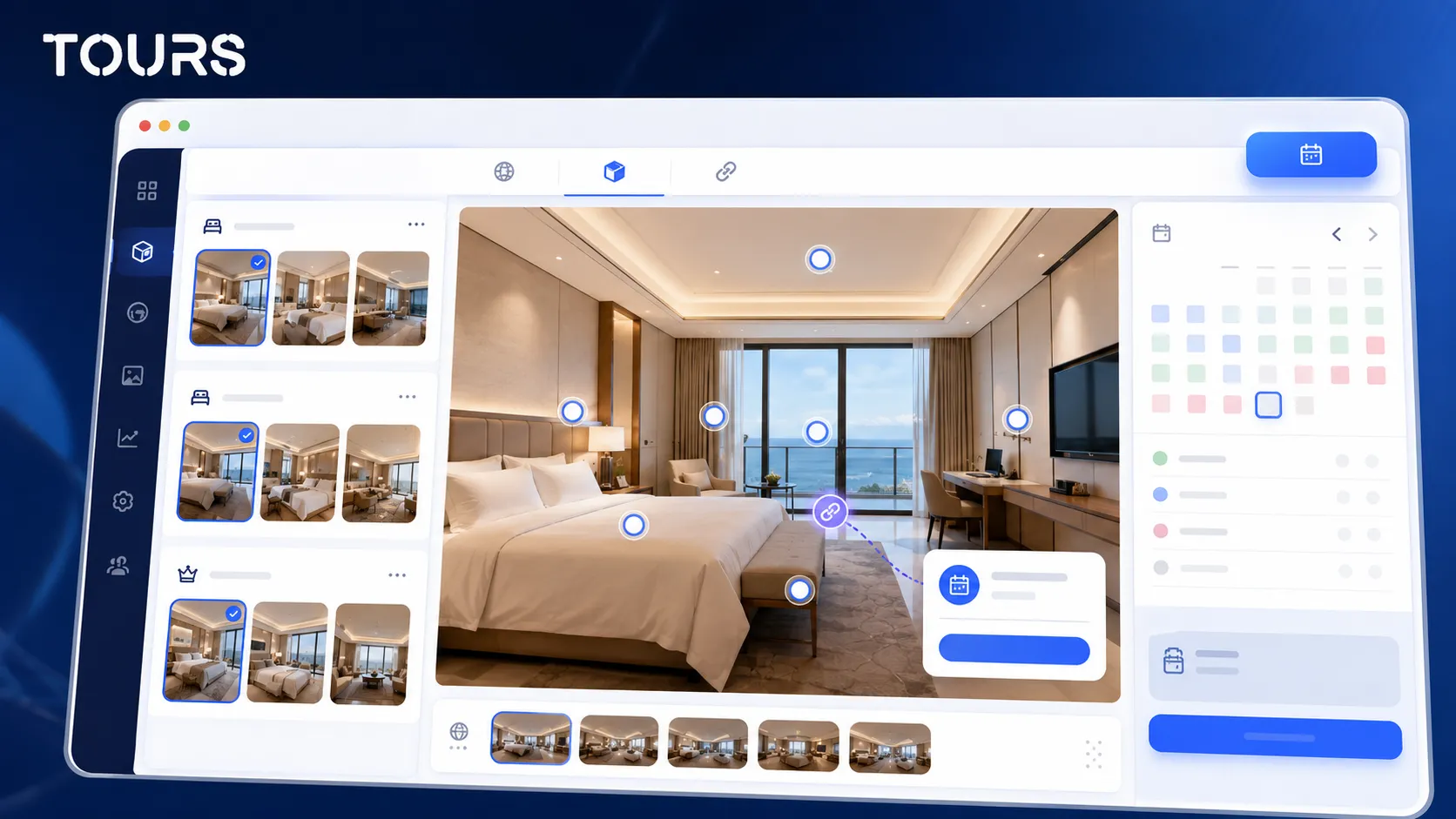
The booking side is configured separately in 'Booking Manager'. There, you set availability, choose the right booking algorithm, optionally add team members who can accept or reject reservations, then connect the calendar to the entire tour, to specific scenes, to scene groups or to hotspots with internal tags.
For hotels, rooms or room types can be represented as scene groups and connected to booking at group level. For hotspots, multiple points with the same tag can use the same calendar, while different points can have separate calendars. If booking is active for the entire tour, the visitor can see a global booking button.
After the tour is ready, publishing does not make it instantly public. The user presses the 'Publish' button, chooses the visibility option and the tour enters approval by a Tours moderator before public activation. This step helps maintain a clean experience for tours published on the platform.
What should you measure monthly to avoid falling back into dependency?
Measure the monthly indicators that show whether direct bookings are growing for healthy reasons. It is not enough to see more inquiries on the website. You need to know which channels bring profitable guests, which pages or scenes convince visitors, where they get stuck and whether guests return without mediation.
- Direct bookings as a share of total bookings and how that changes by season.
- Net revenue by channel after commission, discounts, ads and cancellations.
- Cancellation rate by channel and its impact on rooms that are hard to resell.
- Branded searches and visits to room or package pages.
- Tour scenes that receive the most visits and hotspots that receive clicks.
- Lost inquiries caused by slow response, incomplete information or an unclear calendar.
In Tours, usage statistics are included in all plans, so you can see how the tour is explored, which scenes attract attention and which hotspots receive clicks. This data does not replace existing hotel systems, but it helps you improve the presentation that supports direct booking.
Frequently Asked Questions
What do direct bookings vs OTAs mean for a hotel?
Direct bookings are inquiries or reservations made through the hotel's own channel, such as the website, phone, email or an interactive tour with a booking action. OTAs are third-party platforms such as Booking.com or other online agencies. The main difference is control: cost, guest data, communication and loyalty are easier to manage on the direct channel.
Should I stop using Booking.com completely?
Usually, no. For many hotels and guesthouses, Booking.com remains useful for visibility, new demand and markets where the property is not known yet. The risk appears when it becomes the only real sales channel. A safer strategy is to keep OTAs for discovery and gradually improve your own website for direct bookings.
How do you reduce Booking.com dependency without losing occupancy?
Start with segments where you already have interest: branded searches, returning guests, premium rooms or longer stays. Improve the room page, add a clear booking action, explain the benefits of booking directly and measure results monthly. Do not block OTAs suddenly. Move directly capturable demand gradually toward your own website.
Are Booking.com commissions the only reason to grow direct bookings?
No. Commission matters, but direct bookings also matter for control over the guest relationship. You can communicate more clearly before arrival, explain differences between rooms, create return-stay offers and collect first-party data with consent. For many properties, these benefits are as important as reducing cost per booking.
What role does a 360° virtual tour play in direct bookings?
A 360° virtual tour reduces uncertainty before booking. The guest can see the room, bathroom, balcony, reception, terrace, parking area or restaurant in a realistic path. If the tour is on the website and has a booking action near the relevant information, the visitor has more reasons to stay on the direct channel.
Does Tours replace a PMS or channel manager?
No. Tours should not be presented as a replacement for a PMS, channel manager, POS or operational hotel systems. Tours complements the process through an interactive 360° presentation connected to bookings, inquiries, hotspots, usage statistics, QR sharing and website integration. For centralized availability across all channels, properties may still need dedicated systems.
Can I connect bookings to different rooms in Tours?
Yes. In Tours, rooms or room types can be organized as scene groups and connected to a booking manager at group level. Booking can also be connected to the entire tour, to individual scenes or to hotspots through internal tags. This way, the visual presentation and availability can follow the real structure of the property.
Does every hotspot need a separate calendar?
No. A hotspot can have its own calendar if it represents a separate resource, but multiple hotspots can share the same availability through the same internal tag. For example, several scenes of the same room can point to the same calendar, while different areas can be configured separately only when it makes operational sense.
What should I add to my website to grow direct bookings?
You need clear information about rooms, prices or inquiries, policies, amenities, location, good photos, a 360 tour where the visual experience matters and a booking action that is easy to find. The website does not need to be complicated, but it must answer the questions that make the guest go back to an OTA for reassurance.
How do I test whether a direct booking strategy works?
Choose a period, a room type or a clear offer and measure before and after. Track direct inquiries, cancellation rate, net revenue by channel, visits to the room page and tour interactions. If guests spend more time on your own content and send more direct inquiries, expand the test gradually.
If you want to reduce OTA dependency without losing clarity for guests, you can test Tours with a free 30-day trial, no card required. Plans start at €19/month, and Pro includes bookings from €59/month, so you can start with the 360° presentation and add bookings when the direct flow makes sense.
Sources
Studies and reports cited in this article
All sources are checked and publicly available.
- 2026 independent hotel reportreportCloudbedsData on OTA booking share, direct reservations and cancellations for independent hotels.
- Hotel distribution outlookreportSkift ResearchAnalysis of how digital direct channels and OTAs are evolving in hotel distribution.
- Guide to Booking.com feesdocumentSiteMinderExplains how Booking.com commissions can vary for hosts and hoteliers.
We carefully select trusted sources to keep the content relevant and up to date.