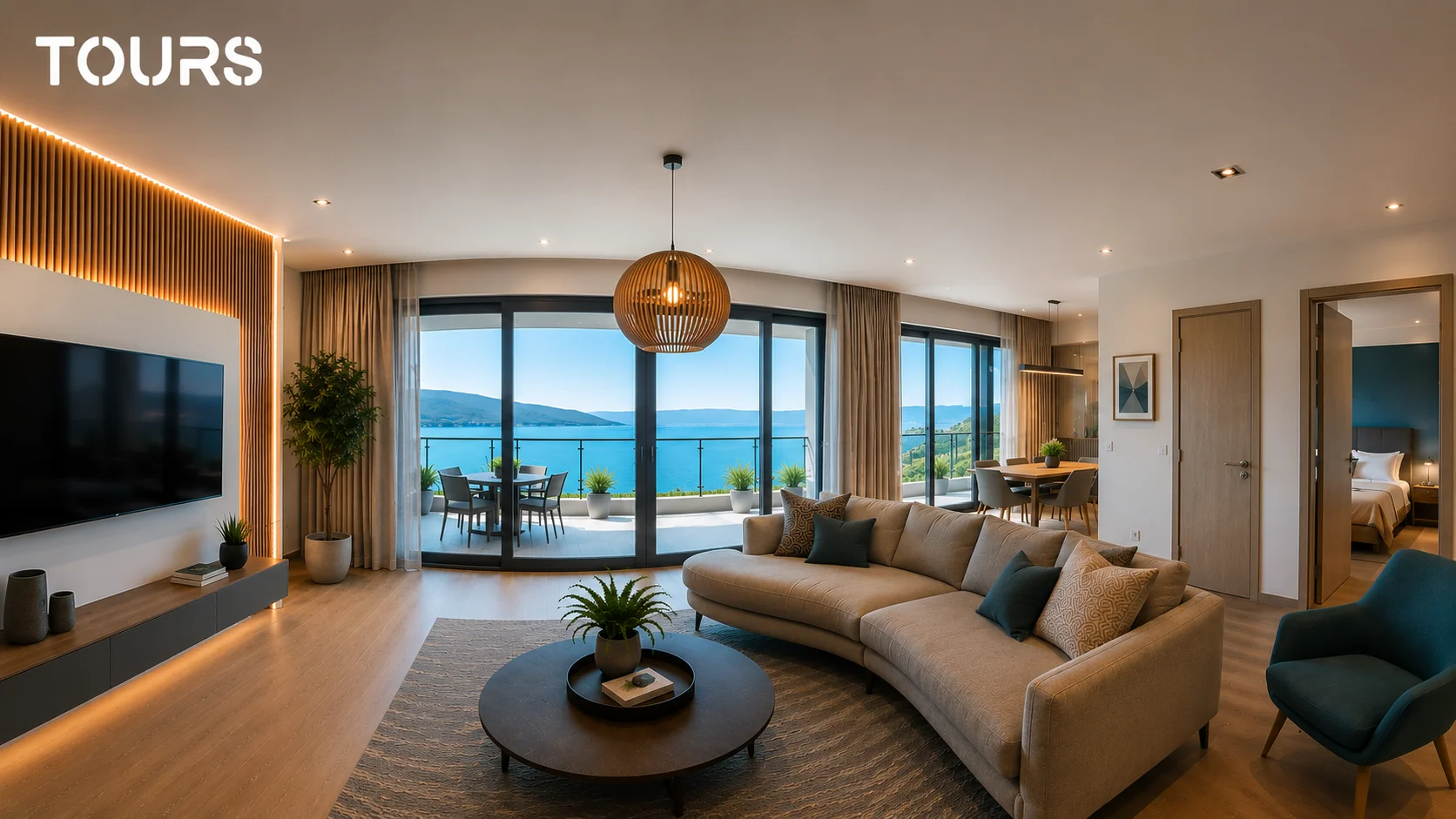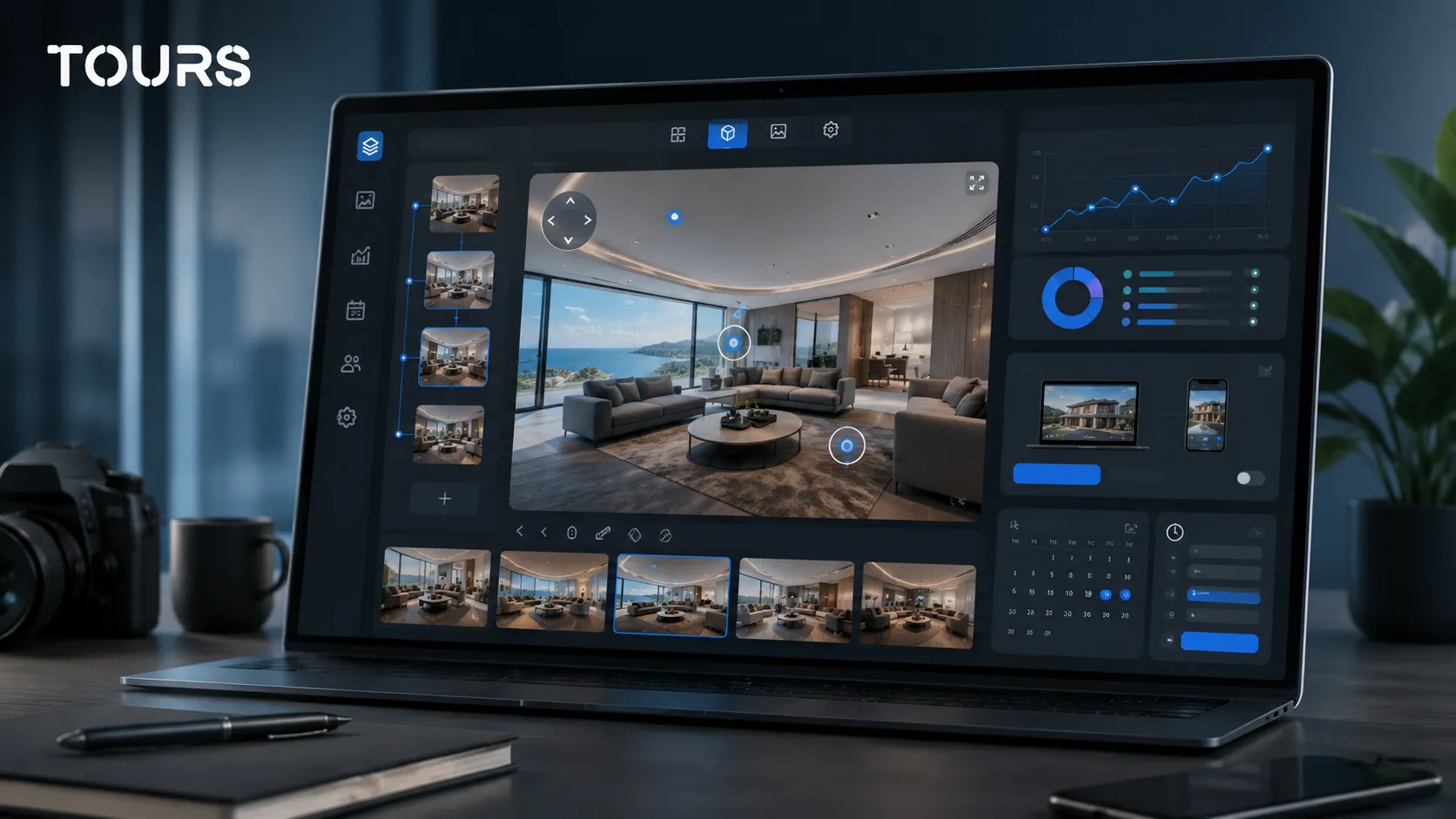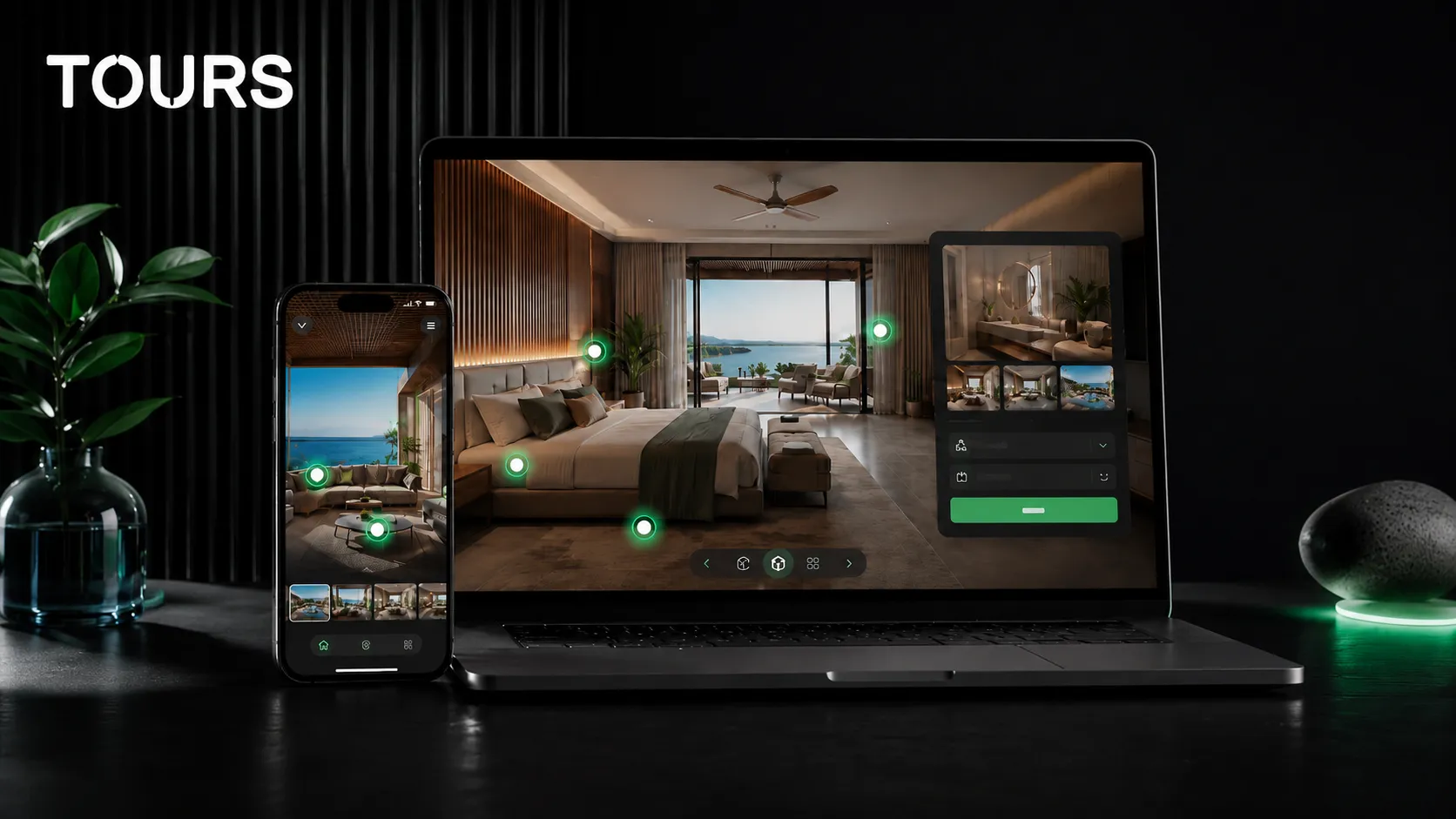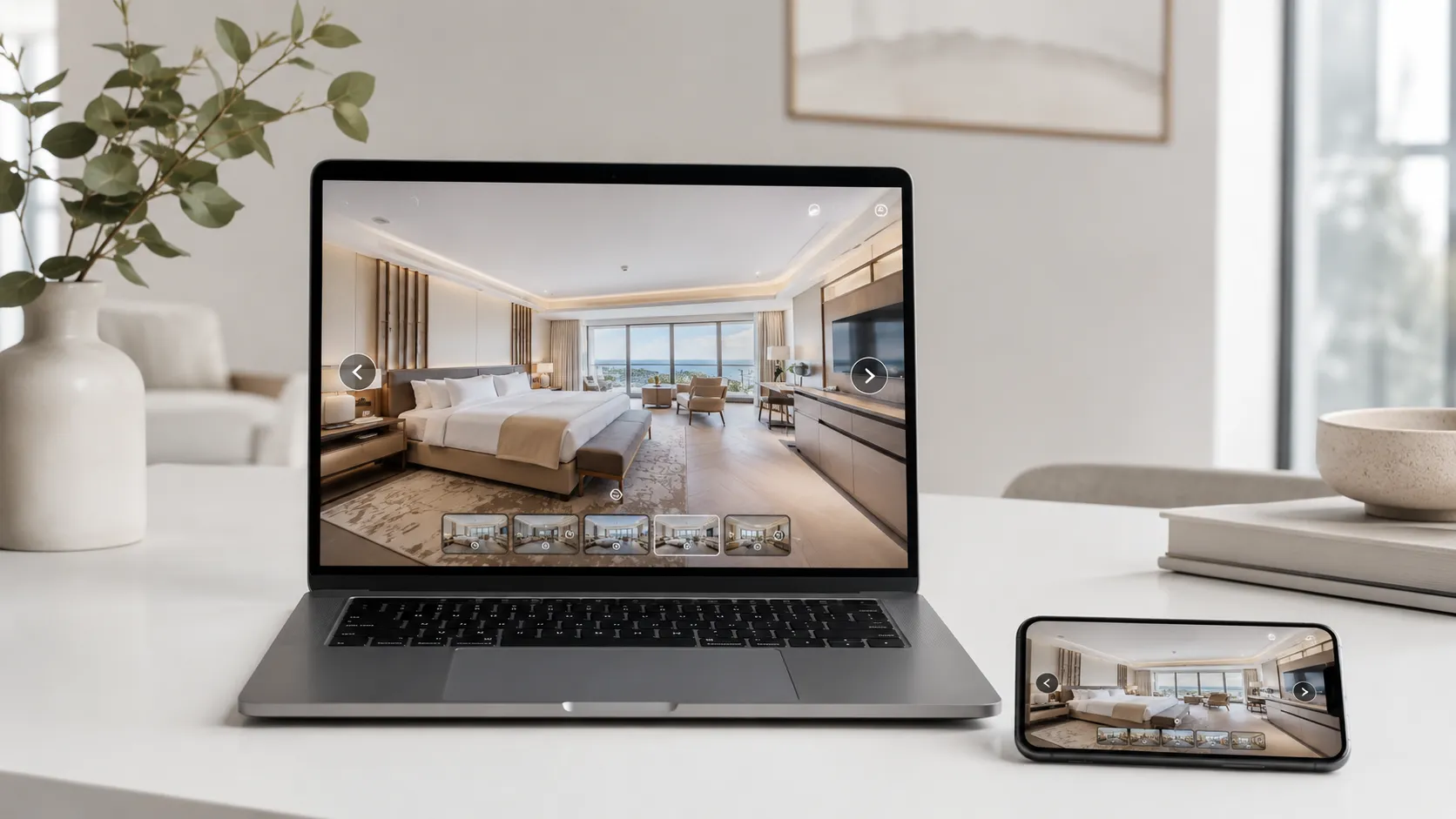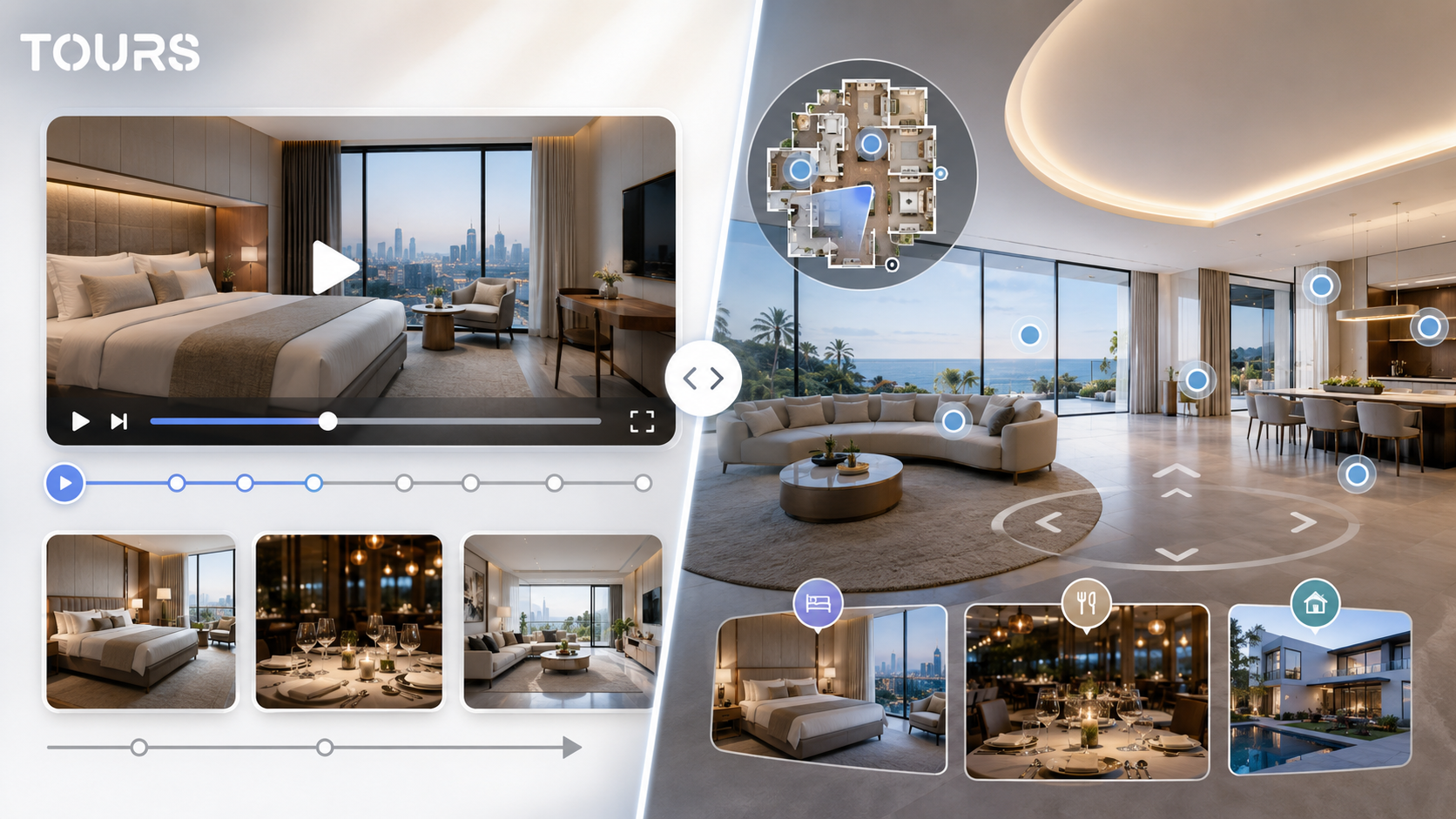

When you compare a virtual tour and video, the main difference is control. Video leads the viewer through an edited story, while a 360° virtual tour lets people choose where they go, which details they check and when they take the next step. For real spaces, the two formats solve different moments in the customer decision.
Tours is a SaaS platform for interactive 360° virtual tours with hotspots, integrated bookings and usage statistics. For hotels, restaurants, real estate properties, showrooms and event spaces, the useful question is not only which format looks better, but which format helps the visitor decide.
In short
- Choose video when you need emotion, pace, atmosphere, storytelling and fast distribution on social media.
- Choose a 360° virtual tour when customers need to check the space, layout, rooms, tables, areas or details before contacting the business.
- Choose drone footage when the exterior, position, land, access or surroundings matter more than the interior.
- Combine formats when the decision has higher stakes, such as a stay, a real estate viewing, an event, a showroom visit or a premium restaurant booking.
- In Tours, a 360 tour can include hotspots, website integration code, QR sharing, usage statistics and context-aware bookings.
Virtual tour vs video: what are you really comparing?
You are comparing two different ways to reduce uncertainty. Video answers the question of how the place feels, while a 360° virtual tour answers the question of how the place is organized. For quick decisions, video may be enough. For decisions where the customer needs to inspect the space, a 360 tour is more useful.
A presentation video is linear: you set the shots, order, music, pace and message. It is very good for a first impression, campaigns, ads and social content. A virtual tour is exploratory: the visitor decides whether to enter a room, check the terrace, look at a table, open an information window or click an action.
| Criterion | Presentation video | 360° virtual tour |
|---|---|---|
| Experience control | You fully control the order of shots and the pace of the story. | The visitor controls the path and checks the details that matter to them. |
| Main role | Captures attention, creates emotion and communicates atmosphere. | Reduces questions about the space, layout, rooms, areas and access. |
| Best channels | Social media, ads, YouTube, campaign pages and short presentations. | Your own website, location pages, listings, QR codes, emails and sales pages. |
| Shelf life | Can age when the style, offer or season changes. | Stays useful as long as the space looks the same and can be updated scene by scene. |
| Action after viewing | Usually sends people to a website, phone number, form or external page. | Can include actions in context: information, links, requests or bookings. |
Wyzowl data for 2026 shows why video remains strong in marketing: 91% of businesses use video as a marketing tool, and 85% of people say they have been convinced to buy a product or service after watching a video.[1]Source That does not mean video replaces the 360 tour. It means video is very effective for the attraction and quick-conviction stage.
When is a presentation video the better fit?
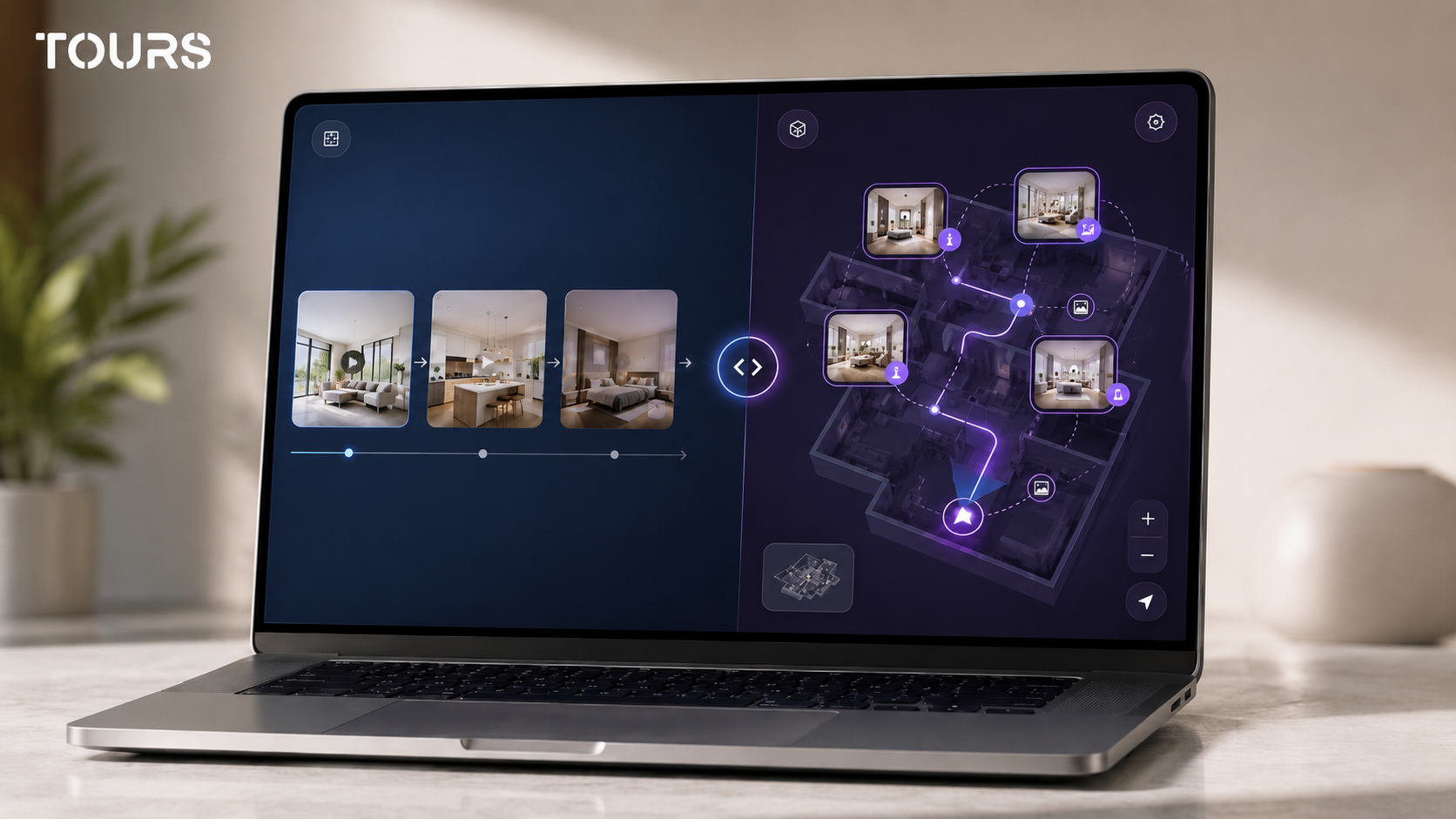
A presentation video is the better fit when you want to create emotion quickly, compress the experience into one minute and control the message. It works well for launches, campaigns, social media, brand visuals, restaurant atmosphere, hotel lifestyle, events, people, services and dynamic shots that a 360 tour cannot express in the same way.
Video is powerful when the space is not the only argument. For example, a restaurant can show dishes, the team, the rhythm of the evening and the atmosphere in the room. A hotel can show people, light, services, breakfast and the city experience. A real estate developer can use video for the promise of the project, not just the interior plan.
- Use video when you need emotion before details.
- Use video when the audience sees the content in a feed and decides within seconds whether to keep watching.
- Use video when you want to explain a story, concept, transformation or benefit.
- Use video when the team, service, atmosphere or event matters as much as the space.
- Use video when you want material that is easy to reuse in ads and seasonal campaigns.
In the same Wyzowl report, 63% of respondents said they prefer a short video to learn about a product or service.[1]Source For commercial spaces, that supports using video as an introduction, not as the only visual proof.
When is a 360° virtual tour the better fit?
A 360° virtual tour is the better fit when visitors need to understand the space before making a decision. It is useful for hotel rooms, apartments, houses, event halls, showrooms, restaurants, clinics, office spaces and any location where questions about position, layout, size or access can block an inquiry.
The National Association of REALTORS describes a virtual tour as an interactive experience that lets buyers explore a property remotely and understand how rooms connect. The same need for orientation also appears in hotels, restaurants, showrooms and event spaces, even when the final decision is different.[2]Source
A 360 tour is less about direction and more about clarity. A customer can check whether a room has a balcony, whether a table is near the window, whether an event hall has easy access, whether a showroom has separate areas or whether an apartment is worth an in-person viewing. Instead of asking by phone, they can see it directly.
| Situation | Better format | Why |
|---|---|---|
| You want fast impact on social media | Video | An edited story captures attention faster in a crowded feed. |
| The customer needs to compare rooms or areas | 360° virtual tour | Free exploration helps visitors check details and reduce hesitation. |
| You want to show surroundings and access | Drone footage plus a short video | Aerial shots explain position and context better than an indoor scene. |
| You want to connect the presentation to a request or booking | 360° virtual tour with actions | The action appears exactly where interest is clearest. |
Where does drone footage fit when choosing between video and a 360 tour?
When you choose between drone footage and a 360 tour, drone footage explains the exterior and context, while the 360 tour explains the interior and the exploration experience. Drone footage is excellent for positioning, land, surroundings, facade, access, scenery and scale. A virtual tour is better for checking details inside the space.
For a hotel, drone footage can show the distance to the beach, parking, the pool and the surrounding area. A 360 tour shows the rooms, reception, breakfast area and path through the space. For a house, drone footage shows the lot and neighborhood, while the tour shows the layout. For a showroom, drone footage matters less than the interior, except when access or the building itself is part of the decision.
- Choose drone footage when the exterior sells the location.
- Choose a 360 tour when the interior needs to be checked before contact.
- Choose a classic video when you want to combine aerial shots, people, atmosphere and details into a short story.
- Avoid using drone footage as a replacement for a tour if the real questions are about rooms, tables, layout or interior areas.
How is the user experience different?
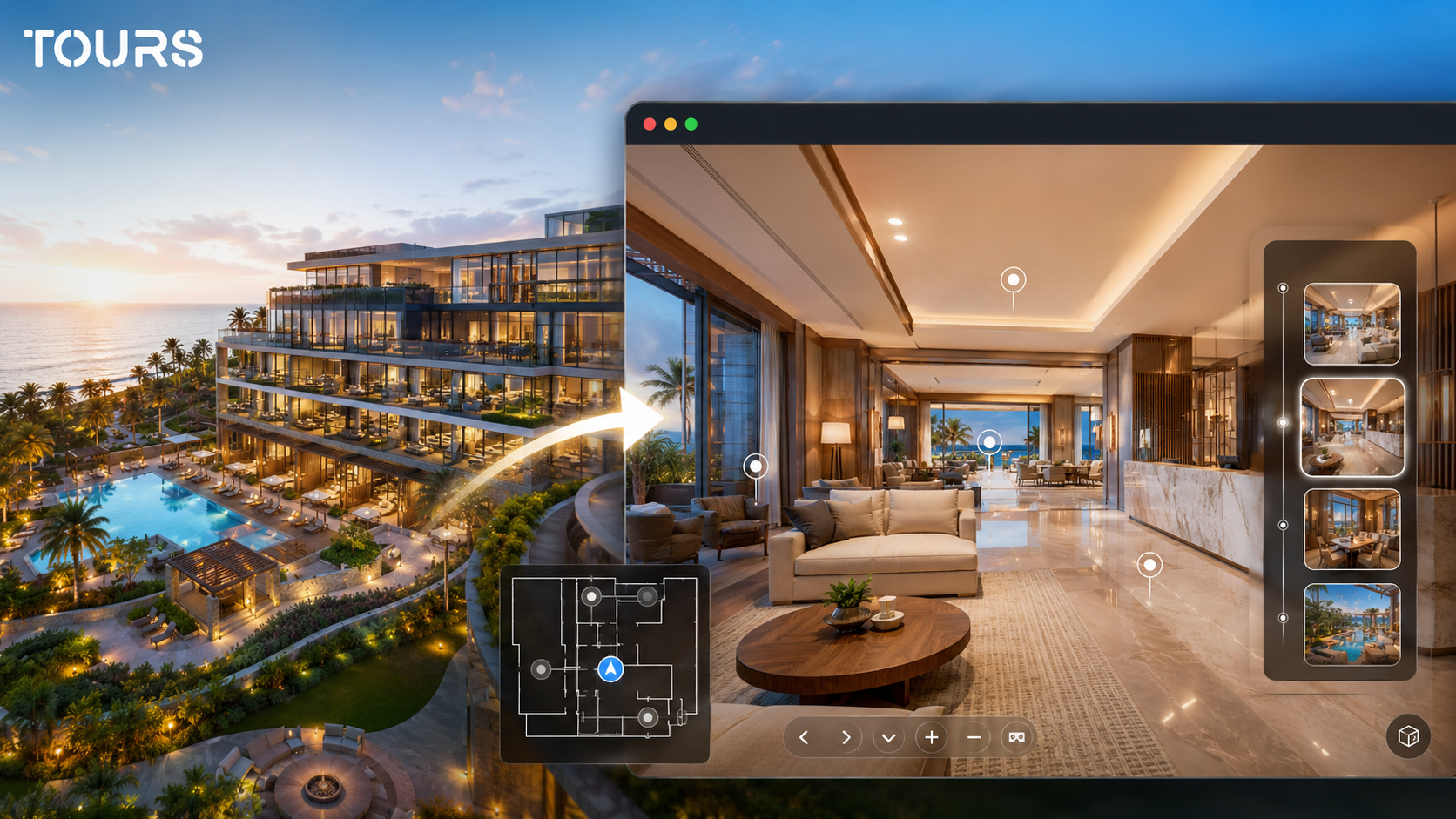
The experience differs by the level of freedom. In a video, the user watches. In a virtual tour, the user searches, compares and decides. This difference matters most when the audience has specific questions: where the bathroom is, what the terrace looks like, how large the room is, what the view from a table is or how to enter the building.
A good video can persuade emotionally, but it may unintentionally hide important details. A good 360 tour is more transparent because it allows verification. That is why a virtual tour is useful in decision-stage moments, while video is useful in discovery, interest and reminder stages.
This difference also changes how you measure success. For video, you track views, retention, shares and clicks. For a virtual tour, you track visited scenes, clicked hotspots, exploration time and actions started from inside the tour. In Tours, usage statistics are included in all plans, so you can see which spaces attract real interest.
How does the decision change for hotels, restaurants and real estate?
The decision changes based on what the customer needs to understand before contacting the business. For hotels, the tour builds trust in rooms and facilities. For restaurants, it helps guests choose an area or table. In real estate, it helps filter viewings. Video remains useful for atmosphere and promotion.
In hospitality, the commercial context matters. Deloitte notes in its 2026 analysis that some higher-income travelers have become more financially cautious, and that caution can influence travel planning.[3]Source In this context, clear visual presentations can help customers compare rooms, facilities and experiences more easily before booking.
| Industry | Video mainly helps with | A 360 tour mainly helps with |
|---|---|---|
| Hotels and guesthouses | Atmosphere, lifestyle, services, breakfast, people-focused shots and the destination. | Rooms, reception, facilities, layout, differences between room types and trust before booking. |
| Restaurants | Energy, dishes, team, events, a busy evening or the culinary concept. | Dining room, terrace, bar, private room, tables, positioning and choosing the right area. |
| Real estate | Brand presentation, project story, neighborhood, exterior and emotional benefits. | Layout, rooms, light, path, finishes and filtering unnecessary viewings. |
| Showrooms | Brand, new products, products in use and campaign messages. | Space organization, product zones, points of interest and contextual requests. |
For dedicated guides on each vertical, use the recommended articles at the end. This article stays focused on choosing between formats, not on the full buildout of a tour for each industry.
How do you combine video, a 360 tour and bookings without complicating the site?
The right combination is simple: use video for attention, the 360 tour for clarity and the booking or request for conversion. On the website, the video can sit near the top of the page, while the 360 tour can appear where visitors compare spaces, rooms, tables, apartments or services.
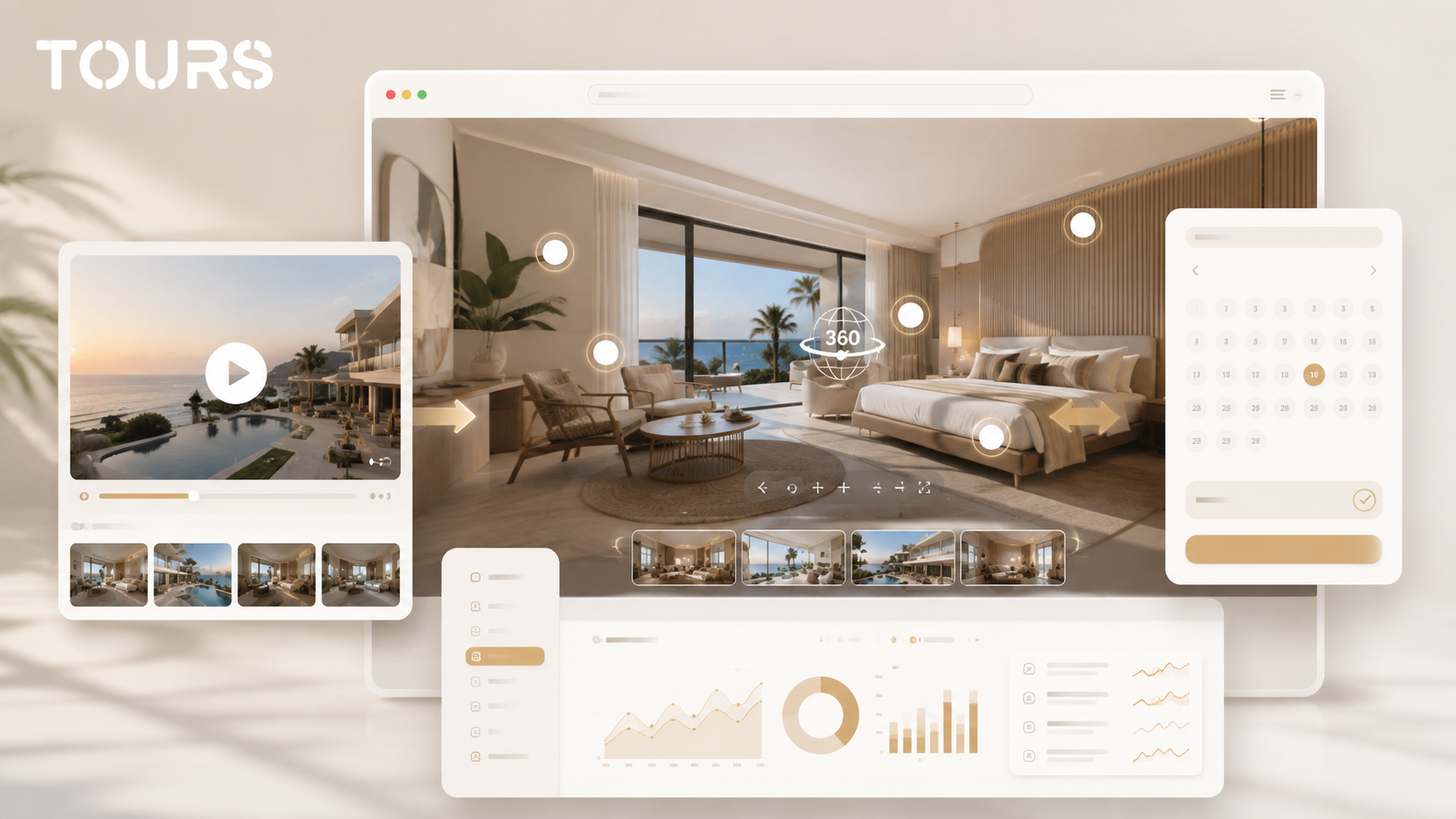
In Tours, you can create the tour in the browser, publish it after moderator approval and add it to your website with an integration code. Hotspots can show information, images, videos, external links or actions. This turns the tour from a simple presentation into a space where the visitor can understand and act.
Bookings in Tours are configured separately on the Booking Manager page. After you create the calendar, choose the right algorithm and optionally add team members, Booking Manager can be connected to the entire tour, specific scenes, scene groups or hotspots through internal tags.
For hotels, rooms or room types can be represented as scene groups and connected to bookings at the group level. For restaurants, tables or areas can be hotspots; each one can have its own availability, or multiple hotspots with the same tag can use the same calendar. For real estate, scenes, groups or hotspots can trigger viewing requests or quote requests.
To test this without changing the whole site, you can start with one tour, one website integration code on an important page and a few clear actions. Tours offers a 30-day free trial with no card, and plans start at €19/month. The Pro plan includes bookings from €59/month.
How do you choose the right format in practice?
Choose the right format by starting with the question you need to remove from the customer mind. If the question is whether the place looks attractive, start with video. If the question is what the space actually looks like, choose a 360 tour. If the question is where it is and what is around it, add drone footage.
- For awareness and ads, start with a short video.
- For sales pages, listings and serious decisions, add a 360° virtual tour.
- For locations where the exterior matters, add drone footage.
- For bookings or requests, connect the action to the tour, not only to a generic button on the page.
- For recurring decisions, measure which scenes and hotspots receive interest, then adjust the presentation.
A practical rule: if you can say everything in 60 seconds and the path through the space does not matter, video may be enough. If the visitor would ask orientation questions or request extra photos, the 360 tour is worth including. If location or land is part of the value, drone footage completes the picture.
Frequently Asked Questions
Virtual tour or video: which is better for presenting a space?
There is no universal winner. Video is better for emotion, pace and fast distribution, while a virtual tour is better for exploring the space. For hotels, restaurants, real estate and showrooms, the best option is often the combination: video for the first impression and a 360 tour for checking details.
Can a presentation video replace a 360° virtual tour?
It can replace the tour only when the audience does not need to inspect the space. If the decision depends on the room, layout, table, path, access, terrace or facilities, video does not offer the same freedom. In those cases, a 360 tour reduces uncertainty more effectively.
Can a virtual tour replace a promotional video?
A virtual tour can carry a lot of visual information, but it does not have the same narrative pace as an edited video. If you want campaigns, ads, social content or storytelling with people and atmosphere, video remains useful. A virtual tour is better for the stage where the customer checks the space before contact.
When should I use drone footage instead of a 360 tour?
Drone footage is worth using when the exterior is an important selling point: view, land, access, positioning, parking, surroundings, beach, lake, mountains or property size. The 360 tour remains better for interiors and details. For many properties, drone footage is a useful supplement, not a replacement.
What should I choose for a hotel, video or virtual tour?
For a hotel, video is good for atmosphere, destination and services, while the virtual tour is good for rooms, facilities and trust before booking. If you have different room types, a 360 tour helps guests understand the difference between them. Video can attract; the tour can clarify.
What should I choose for a restaurant, video or virtual tour?
For a restaurant, video helps with appetite, atmosphere, team and energy. The virtual tour helps customers see the dining room, terrace, bar, private room and table positioning. If you receive questions about areas, tables or private events, a 360 tour can reduce hesitation before booking.
What should I choose for real estate, video or virtual tour?
In real estate, a virtual tour is usually more useful for filtering buyers because it shows the layout and path through the property. Video is good for brand presentation, exterior, neighborhood and the story of the home. For valuable listings, the combination of video, a 360 tour and a floor plan can be the clearest option.
Can I add video inside a virtual tour?
Yes. In a tour created with Tours, you can use hotspots for information, images, videos and external links. That way, video is not separate from the experience; it appears in the right context. For example, a point in a restaurant can open a clip about the menu, or a point in a hotel can explain a facility.
How are bookings connected to a virtual tour in Tours?
In Tours, bookings are configured on the Booking Manager page and then connected to the entire tour, specific scenes, scene groups or hotspots through internal tags. If the booking is connected to the whole tour, a global button can appear. If it is connected to a hotspot, the booking window opens when the visitor clicks it.
Is it worth using both formats on the same page?
Yes, it is worth it when the customer decision needs both emotion and clarity. You can use a short video near the top of the page for attraction, then a 360 tour lower on the page for exploration. The important part is to keep the page light: each format should have a clear role.
If you want to see quickly how a 360 tour would work for your space, start with one location, a few carefully chosen scenes and one clear action. In Tours, you can test for 30 days with no card, then decide whether the tour complements the video, replaces it on certain pages or becomes the center of your online presentation.
Sources
Studies and reports cited in this article
All sources are checked and publicly available.
- Video marketing statistics for 2026reportWyzowlReport based on responses from marketers and online consumers, useful for understanding the role of video in persuasion, learning and sales.
- Guide to virtual tours in real estateguideNational Association of REALTORSGuide published in 2025 about the role of virtual tours, 360 capture, platforms, costs and the value of space exploration for buyers.
- Travel industry outlook for 2026reportDeloitteAnalysis of travel demand, financial caution and behavior changes that can influence how hotels present their offer.
We carefully select trusted sources to keep the content relevant and up to date.