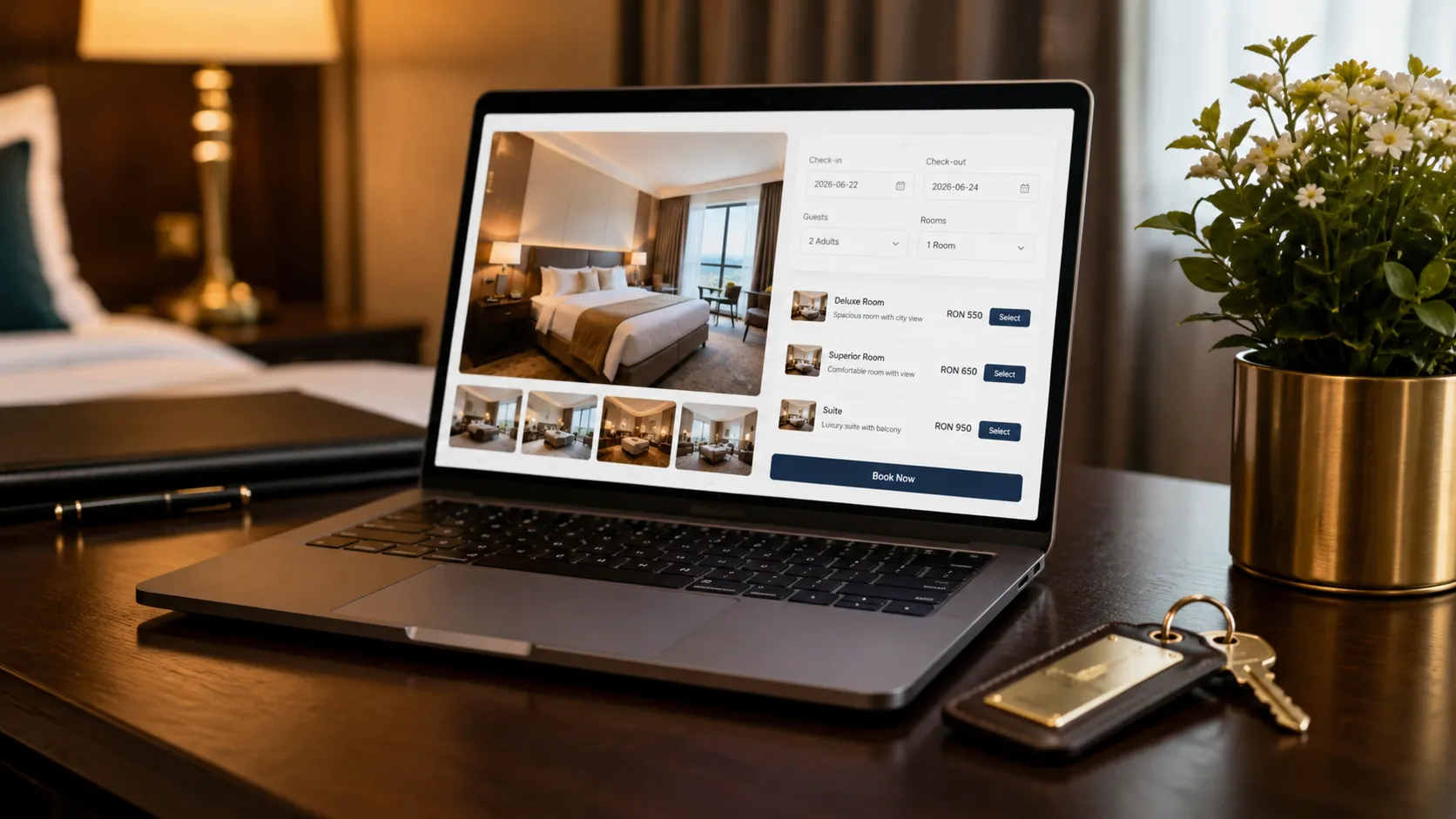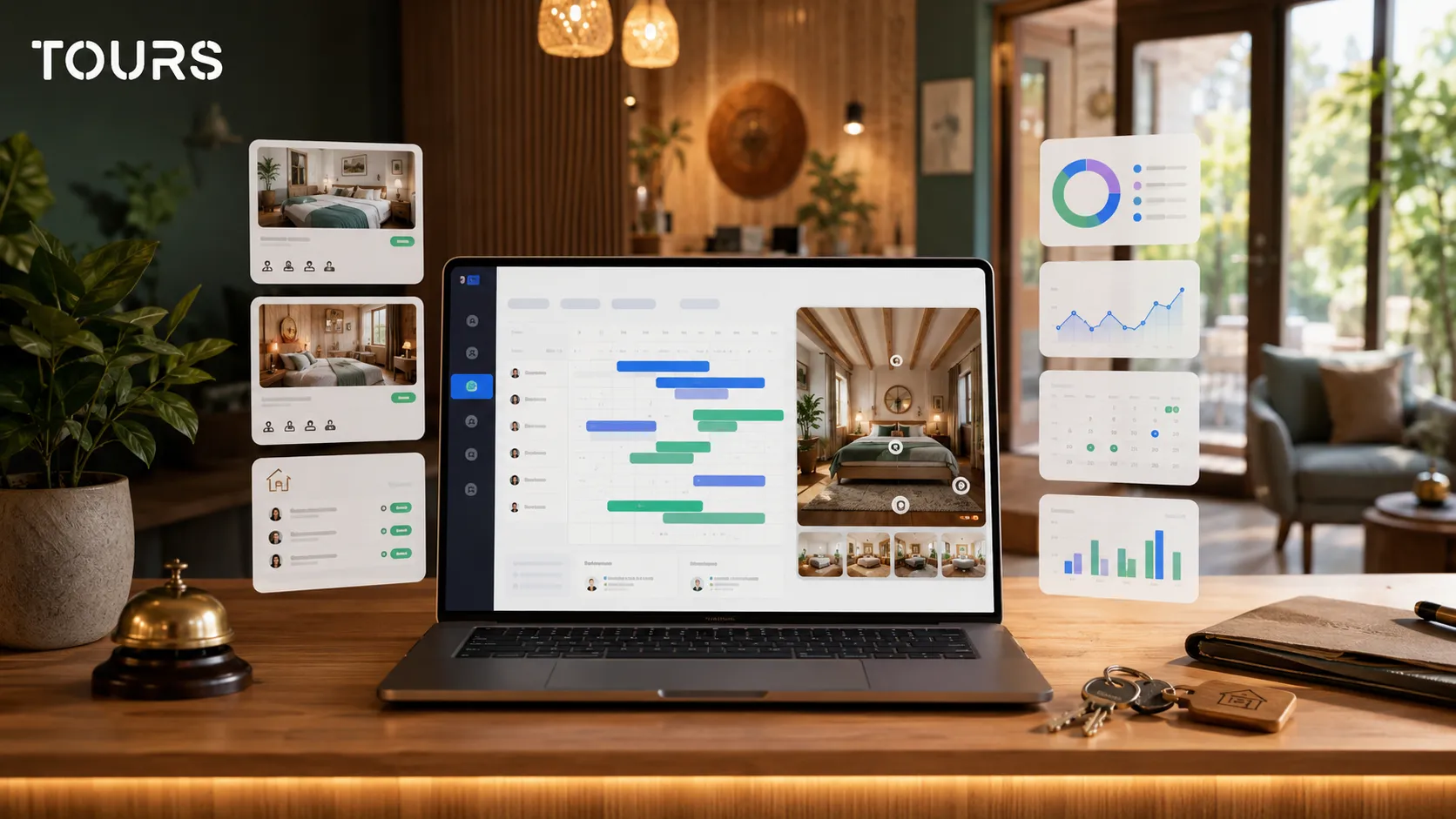

A guesthouse booking system is the solution that helps you receive direct inquiries or bookings from your own website without relying only on phone calls, private messages, or commission-based platforms. For a small guesthouse, the goal is not to complicate operations, but to keep availability clear, rules simple, and the path from interest to booking easy to follow.
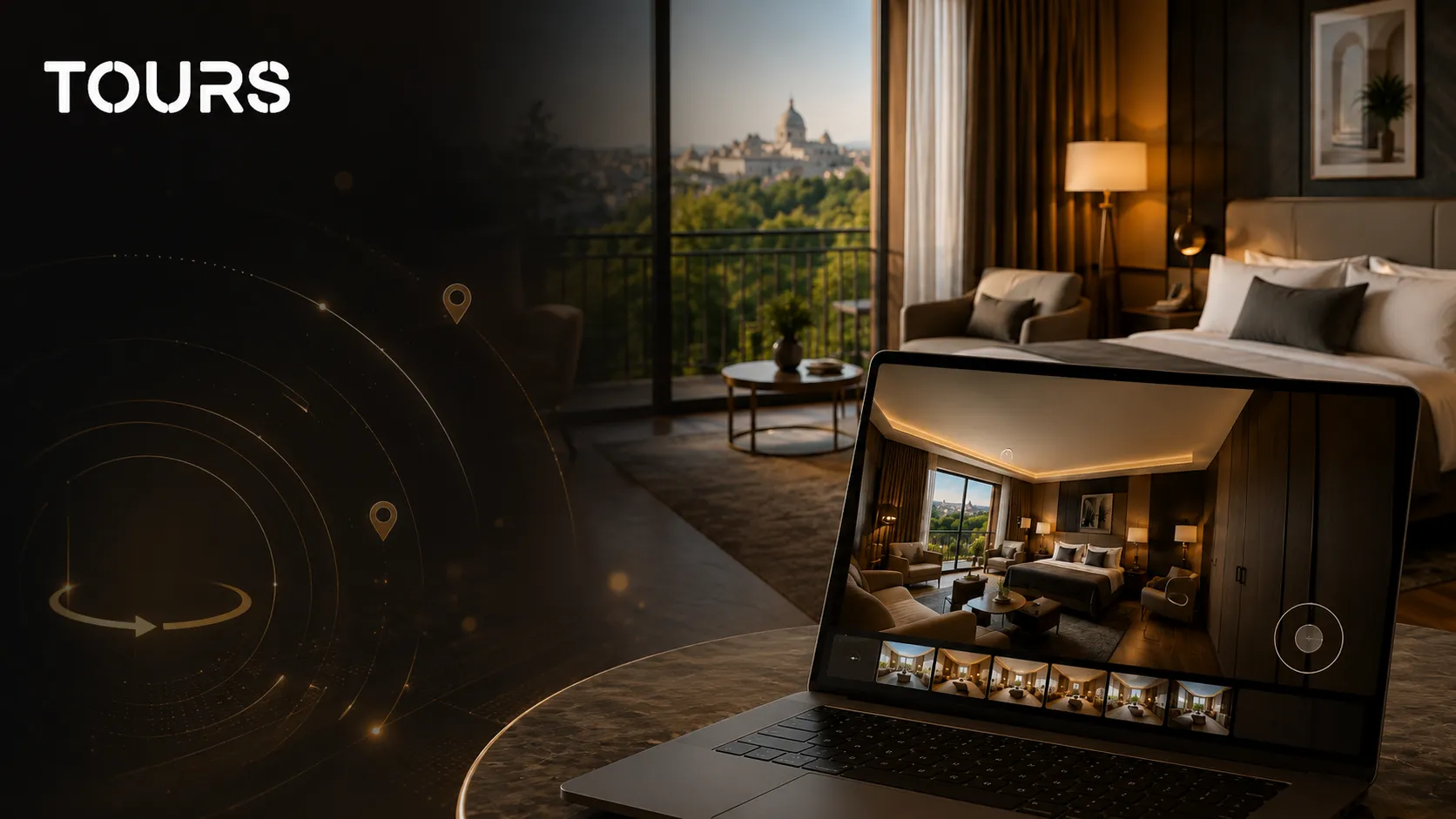
Tours is a SaaS platform for 360° virtual tours with interactive points, integrated bookings, and usage statistics. For a guesthouse, it is especially useful when you want guests to see the rooms and shared spaces before sending a direct request from your website.
In short
- For a guesthouse, the booking system should make available rooms, dates, confirmation rules, and guest messages clear.
- Direct bookings do not necessarily replace external platforms, but they reduce dependence on them and keep the guest relationship on your own website.
- A booking calendar for a guesthouse must be easy to update, especially when the same room appears in multiple places.
- A virtual tour helps the guest understand the room, courtyard, breakfast area, parking, and atmosphere before sending a request.
- In Tours, bookings can be connected to the whole tour, specific scenes, scene groups, or interactive points with internal tags.
What does a guesthouse booking system mean for a small property?
For a small property, a guesthouse booking system means an organized way to receive inquiries, show availability, and confirm stays without repeating the same messages over and over. It does not need to be a heavy hotel system. It should be a clear tool for rooms, dates, rules, and communication.
Context matters: INS data for 2024 shows almost 14.3 million arrivals in Romanian tourist accommodation structures and more than 30.1 million overnight stays, up compared with 2023[1]Source. For a guesthouse, that means demand exists, but small properties need to answer quickly and clearly when a guest is comparing several options.
The important difference is control. When the booking comes directly from the website, the owner can explain house rules, highlight the guesthouse advantages, and avoid long message threads about the same questions: whether parking is available, which rooms are open, whether children are accepted, how breakfast works, or what happens if the guest cancels.
- Room or room type, with a name that is easy for the guest to understand.
- Updated availability calendar, not just a general contact form.
- Clear rules for arrival, departure, deposit, cancellation, and number of guests.
- Manual or automatic confirmation, depending on how the guesthouse works.
- Connection with the presentation page, photos, 360 tour, and website integration code.
Why do direct bookings matter for guesthouses?
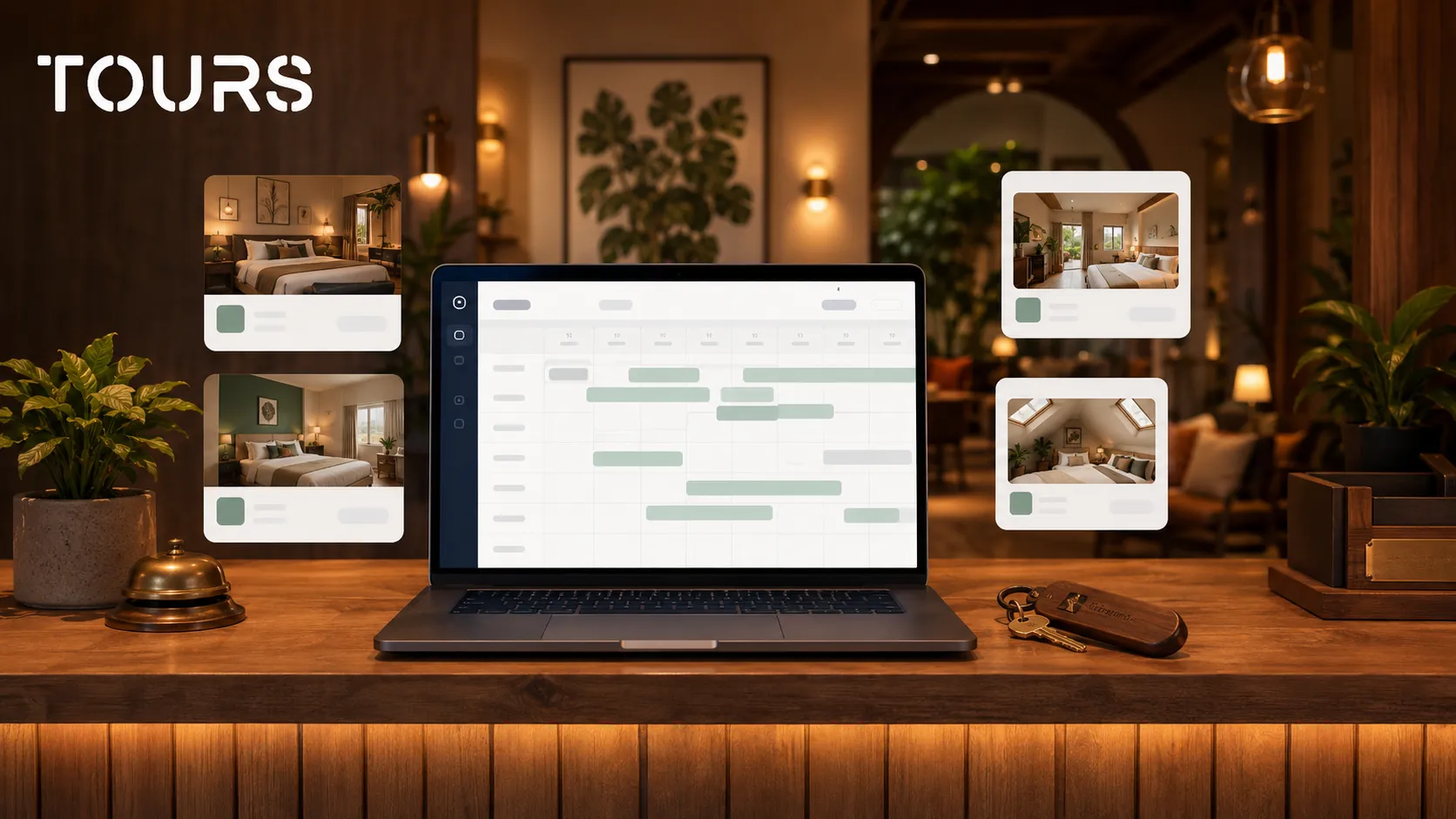
Direct bookings matter because they keep the relationship between the guesthouse and the guest on your own channel. The owner controls the presentation, messages, rules, and acquisition cost. External platforms can still be useful, but the guesthouse website should be able to turn interest into an inquiry without unnecessary steps.
Accommodation demand remains competitive across Europe: Eurostat reported that in 2024 nights spent in tourist accommodation establishments in the European Union exceeded 3 billion for the first time, a 2.7% increase compared with 2023[2]Source. In that context, guesthouses do not win only by being present online. They win through clarity, fast response, and trust.
Guesthouses can also benefit from interest in quieter places: the European Travel Commission indicated in 2025 that 77% of Europeans planned trips between June and November, while 55% were looking for less crowded destinations or places outside very popular routes[3]Source. For small properties, a direct presentation on the website can become a real advantage.
A commission-free booking system does not mean the guesthouse gives up other channels. It means part of the demand can be captured directly, especially from guests who found the property on a map, on social media, through recommendations, or through local searches and want to quickly check whether it is worth sending a request.
- You keep the conversation with the guest before the booking.
- You can promote your own packages, preferred rooms, or themed stays.
- You reduce repetitive messages by showing rules clearly next to the calendar.
- You can send the visitor from the 360° virtual tour directly toward booking.
- You get usage statistics on which rooms or areas attract interest.
What should a guesthouse booking calendar include?
A guesthouse booking calendar should show available dates, prevent obvious overlaps, and support the real rules of the property. For a guesthouse, the calendar is useful only if the owner or team can maintain it easily without complicated technical steps.
Guesthouses often have more flexible situations than large hotels. A room may be closed for maintenance, a family may ask for two nearby rooms, and a group may take the entire property. That is why the system needs clear rules, but also manual control when the owner wants to review a request before accepting it.
| Element | Why it matters for a guesthouse | How it should be used |
|---|---|---|
| Room availability | Avoids wrong promises and reduces verification messages. | Every room or room type should have a clear status. |
| Stay rules | The guest understands the main conditions in advance. | Show the deposit, cancellation, arrival time, and number of guests. |
| Manual approval | Helps when the owner wants to confirm details before booking. | Use it for busy periods, groups, or special requests. |
| Automatic confirmation | Reduces response time when the rules are simple. | Use it for standard rooms and date ranges without exceptions. |
For a guesthouse, the phrase 'guesthouse booking calendar' is a useful search term, but in practice you do not need only a calendar. You need a complete flow: the guest sees the space, checks the right option, sends the request, receives confirmation, and knows what comes next.
Booking request or automatic confirmation: how do you choose?
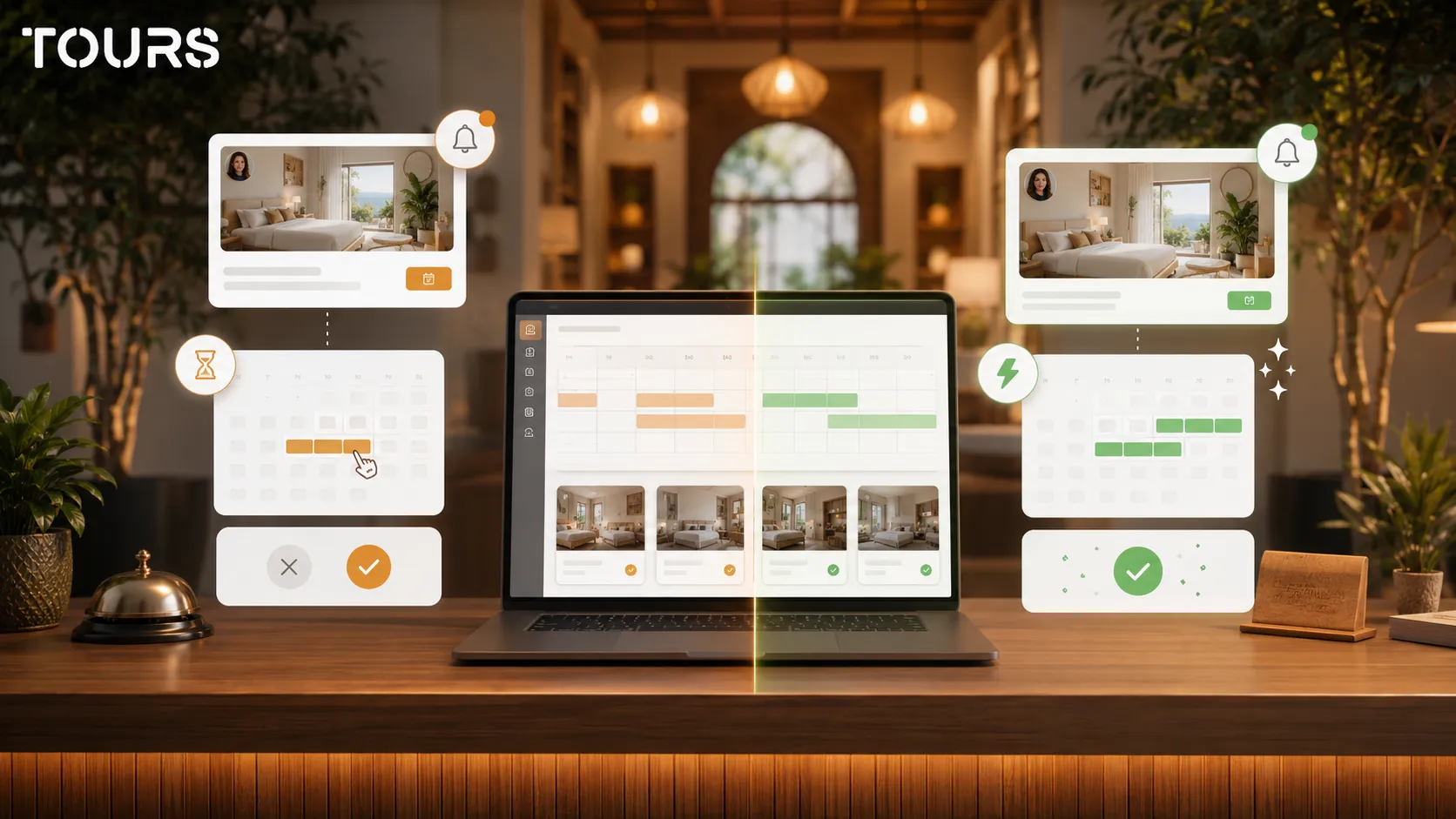
The choice depends on how standardized your guesthouse is. If you have similar rooms, simple rules, and availability that is easy to maintain, automatic confirmation can work well. If you have many exceptions, groups, included meals, or customized packages, a request with manual approval gives you more control.
| Model | When it fits | Main risk |
|---|---|---|
| Request with approval | Guesthouses with few rooms, groups, flexible packages, or periods with special rules. | A slow response can lose the guest if notifications are not reliable. |
| Automatic confirmation | Standard rooms, clear rules, updated availability, and a simple booking process. | One wrong setting can create overlaps or incorrect expectations. |
| Hybrid model | Fast confirmation for simple cases and manual review for special requests. | Requires discipline when defining rules and updating the calendar. |
For many guesthouses, the hybrid model is the healthiest option. Rooms that are easy to sell can use a fast flow, while requests for groups, events, long stays, or peak periods can go to the owner for acceptance. The key is that the guest knows from the start whether the booking is confirmed or only sent for approval.
How does a virtual tour help guests who don't know the property?
A virtual tour helps because it answers visually the questions that simple photos often leave open. The guest can see the room proportions, the path to the courtyard, the breakfast area, parking, terrace, or view. Instead of imagining the property from a few frames, the guest explores it before sending a request.
For guesthouses, trust is essential. The guest is not buying only a bed, but an experience: quiet, cleanliness, access, hosts, shared space, and atmosphere. A 360° virtual tour can show how these elements connect, while interactive points can explain details such as amenities, prices, house rules, or booking options.
- Double room, family room, or apartment, each with a clear path inside the tour.
- Courtyard, gazebo, terrace, playground, or barbecue area presented as real spaces.
- Reception, parking, and access for guests who want to know how they arrive.
- Information points for breakfast, amenities, rules, and nearby attractions.
- Booking button or interactive booking point placed where intent is already high.
This is where the article about hotel and guesthouse virtual tours becomes the natural next step. This guide stays focused on the booking system, while the 360° presentation is treated as a trust and conversion tool, not as a separate topic.
How does Tours connect bookings to rooms, areas, and packages?
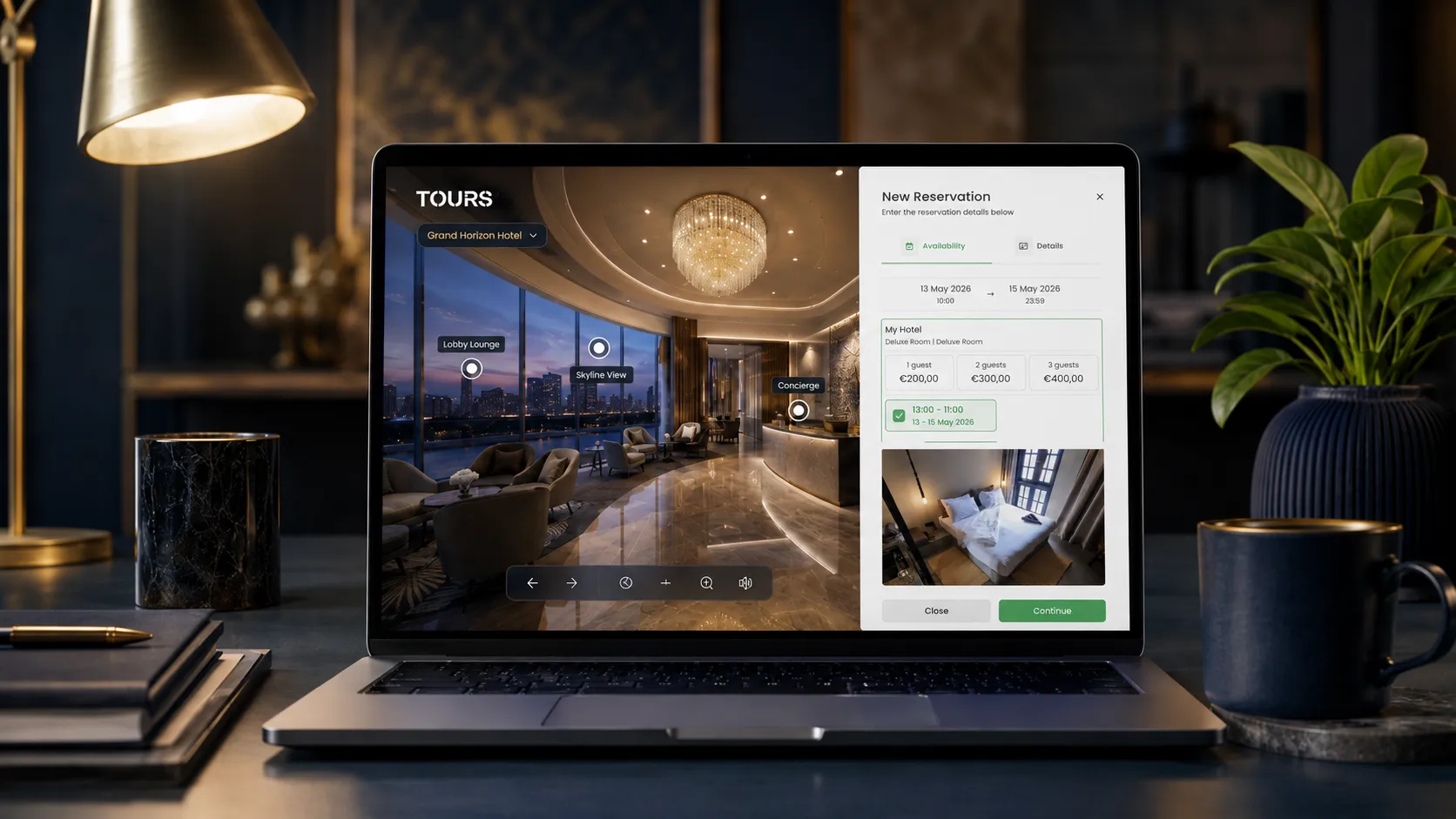
In Tours, bookings are not limited to one button or one point inside the tour. You can connect Booking Manager to the entire virtual tour, to specific scenes, to scene groups, or to interactive points with internal tags. This lets the structure follow the way the guesthouse actually sells rooms.
If you want a simple experience, booking can be connected at the whole-tour level. When it is active, the visitor can see a global booking button during the tour experience. This option fits when the guesthouse sells the property as a whole or when you want one clear action across the entire presentation.
If you want a more precise experience, rooms or areas in the tour can be grouped. For example, all scenes for a family room can form one group, and that group can connect to the right calendar. For interactive points, internal tags allow multiple points with the same tag to use the same availability calendar.
- Tour-level booking, useful for small properties or general inquiries.
- Scene-level booking, useful when a scene represents a room or important area.
- Group-level booking, suitable for rooms represented by several scenes.
- Booking from interactive points, when the guest clicks a concrete element inside the tour.
- Shared calendar through a tag, when several interactive points should lead to the same availability.
If you want to see how this would work for your guesthouse, you can test Tours with the 30-day free trial, no card required. For a simple 360° presentation, plans start at €19/month, and Pro includes bookings from €59/month.
What is the practical Tours workflow for a guesthouse?
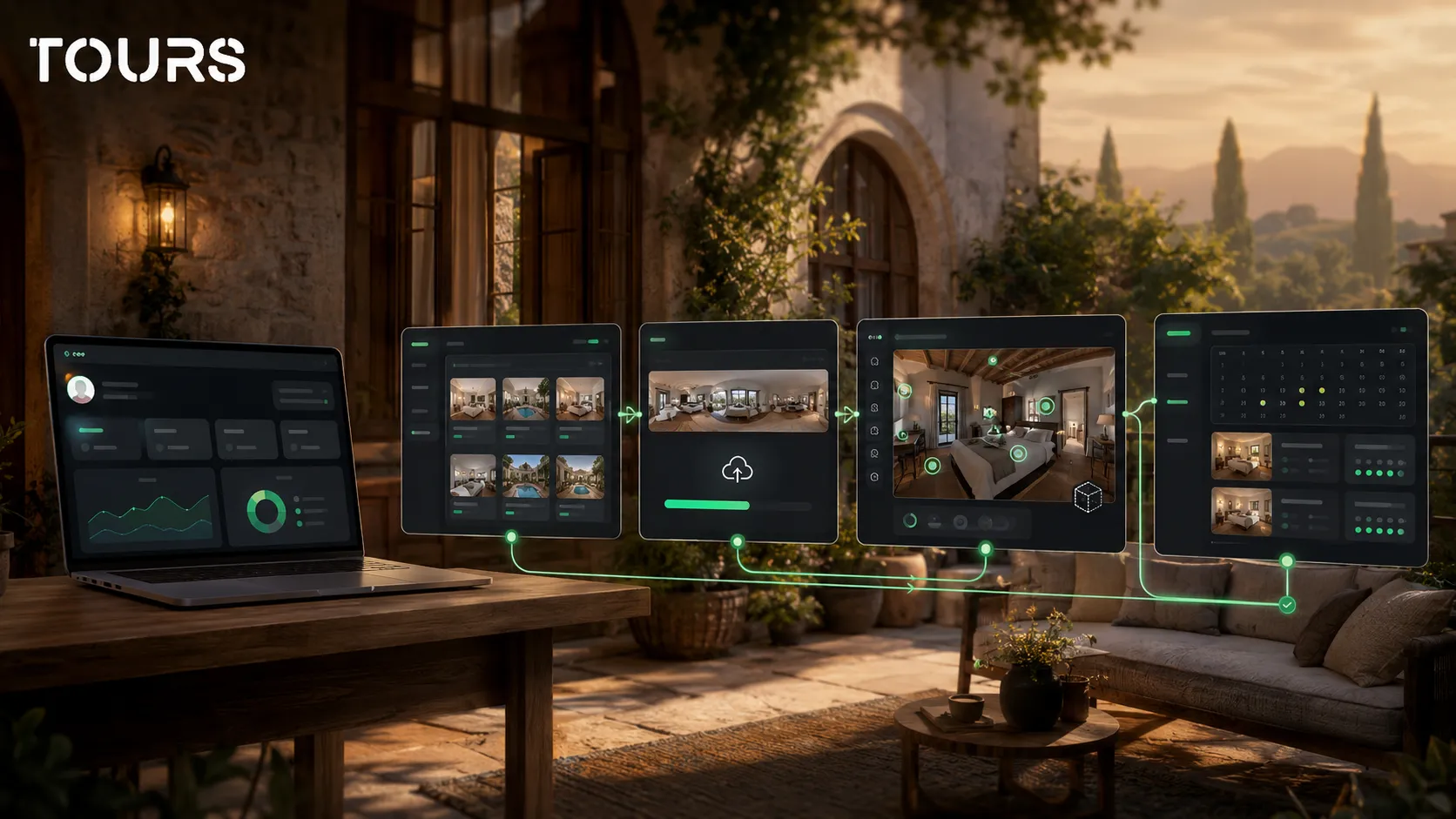
The practical workflow starts with the tour, then continues with bookings. First, you create the 360° presentation of the guesthouse with scenes, groups, and interactive points. After that, you configure Booking Manager, choose the calendar, and connect bookings to the tour, rooms, groups, or points that should open the request.
You start by creating an account on getours.app and entering the Tours app. From the My Tours page, you click the create button, complete the tour name and category, and then you can optionally add the location, price, and tags. In the next step, you upload the first 360° scene and give it a clear name.
After you continue, the 360° editor opens. There you can add more scenes, navigation between spaces, information points, external links, groups, text, images, and video. If certain interactive points should become bookable, you can mark them with internal tags so they can later be connected to the right calendar.
Publishing is done through the Publish button, where you choose the visibility of the tour. After publishing, the tour waits for approval from a Tours moderator before it becomes publicly active. Separately, on the Booking Manager page, you configure availability, the booking algorithm, and, when needed, the team members who can accept or reject requests.
This separation is useful for guesthouses because you can work on the presentation first and then on the commercial rules. You do not have to decide everything on day one. You can launch a 360° presentation, track interest through usage statistics, and add bookings when the flow is clear.
What to check before choosing a commission-free booking system
Before choosing a commission-free booking system, check whether the solution fits the real way inquiries come into your guesthouse. Do not look only at the absence of commission. Look at calendar control, clarity for the guest, website integration, and how easily your team can work with the system.
- Can you work with manually approved requests, automatic confirmations, or a hybrid model?
- Can the calendar be connected to rooms, room types, or scene groups?
- Can you show a booking action inside the virtual tour, not only on a separate page?
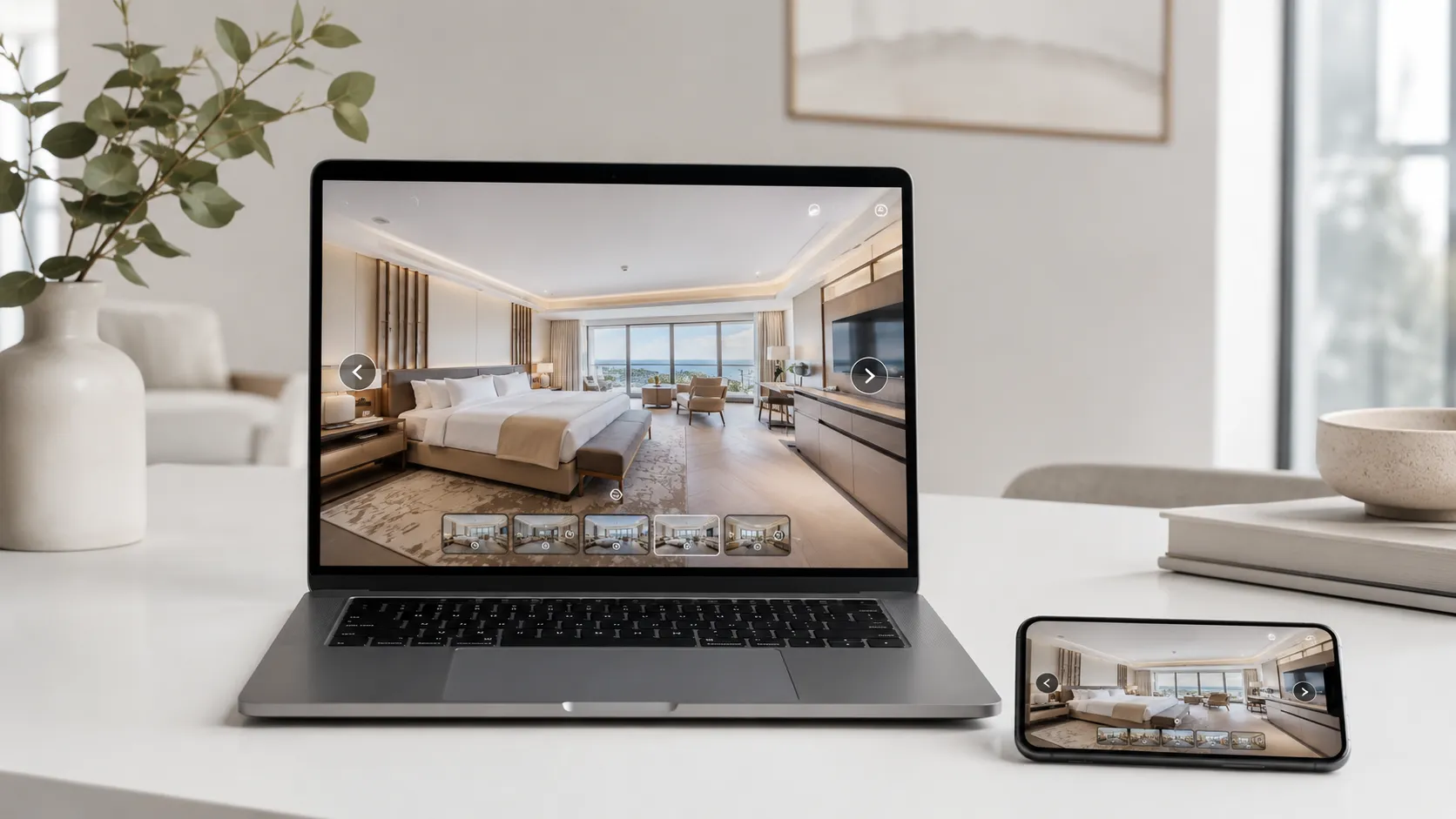
- Can you add the tour to your website with clear and easy-to-use website integration code?
- Do you get usage statistics for visited scenes, clicks on interactive points, and guest interest?
- Does the solution complement existing processes without pretending to replace a PMS or channel manager?
For small guesthouses, the best system is the one you use consistently. If the team does not update the calendar, if the rules are unclear, or if the booking button is hidden, the lack of commission will not help much. Conversion comes from trust, clarity, and fast response.
Frequently Asked Questions
What is a guesthouse booking system?
A guesthouse booking system is a solution that lets the property receive direct inquiries or bookings from its website, organize room availability, and send clear rules to guests. It can work as a smart form, a calendar with manual approval, or a flow with automatic confirmation, depending on how standardized the guesthouse is.
Do I need a booking system if I already receive requests by phone?
Yes, if you lose time answering the same questions or if guests give up before receiving a response. The phone still matters, but an online system clarifies availability, rules, and next steps. For a small guesthouse, the goal is not to eliminate the conversation, but to start it better.
What do direct guesthouse bookings mean?
Direct guesthouse bookings are inquiries or bookings received through the guesthouse's own channel, usually its website, without an external platform fully controlling the guest relationship. The owner can still use other channels, but also has a direct route for guests who want to book directly.
Does a commission-free booking system replace Booking.com or Airbnb?
Not necessarily. A commission-free booking system can complement external platforms and does not have to replace them immediately. For many guesthouses, the healthy option is mixed: platforms bring visibility, while the property website captures part of the direct demand, especially from returning guests or recommendations.
How should a guesthouse booking calendar work?
A guesthouse booking calendar should show real availability, be easy to update, and support the property's rules. Ideally, it can work by rooms, room types, or groups, while the owner can choose whether bookings are confirmed automatically or sent for approval first.
Can I connect bookings to rooms inside a virtual tour?
Yes. In Tours, rooms can be represented through scenes or scene groups, and bookings can be connected at the tour, scene, group, or interactive point level with internal tags. This lets the guest explore the room and send the request from the exact context where interest is highest.
What happens if two interactive points lead to the same room?
In Tours, interactive points with the same internal tag can use the same calendar and the same availability. This is useful when the same room appears in several scenes or when multiple points in the tour should lead to the same booking option without duplicate calendars.
Is automatic confirmation or manual approval better for guesthouse bookings?
For simple rooms and stable rules, automatic confirmation can reduce response time. For guesthouses with few rooms, groups, included meals, or flexible rules, manual approval gives better control. Many properties choose a hybrid model, with a fast flow for simple cases and review for special requests.
Can I add the tour and bookings to my guesthouse website?
Yes. Tours lets you publish the tour and use website integration code, so visitors can explore the guesthouse directly on the property page. Bookings can appear as a global or contextual action, depending on how the tour and Booking Manager are configured.
How much does it cost to test Tours for a guesthouse?
Tours offers a 30-day free trial with no card required. For a simple 360° presentation, plans start at €19/month, while the Pro plan includes booking features from €59/month. For a guesthouse, it makes sense to test the flow first on the main rooms, then expand it.
If you want direct bookings for your guesthouse without building a complicated system from scratch, create a tour in Tours, add the key rooms and areas, then connect Booking Manager where the guest already has clear intent. You can start with the 30-day free trial, no card required.
Sources
Studies and reports cited in this article
All sources are checked and publicly available.
- Tourism in December 2024official dataInstitutul Național de StatisticăOfficial release with data on arrivals, overnight stays, Romanian tourists, and foreign tourists in accommodation structures in Romania.
- Tourism statistics - annual results for the accommodation sectorstatistical dataEurostatEurostat summary of the evolution of nights spent in tourist accommodation establishments in the European Union.
- Monitoring Sentiment for Intra-European Travel Summer and Autumn 2025industry reportEuropean Travel CommissionReport on Europeans' travel intentions and interest in less crowded destinations.
We carefully select trusted sources to keep the content relevant and up to date.